
If you maintain a bird bath fountain long enough, you’ll eventually run into the same issue everyone does: algae, mineral buildup, and slimy surfaces.
One of the most common questions people ask when trying to clean their bird bath is whether vinegar is safe to use.
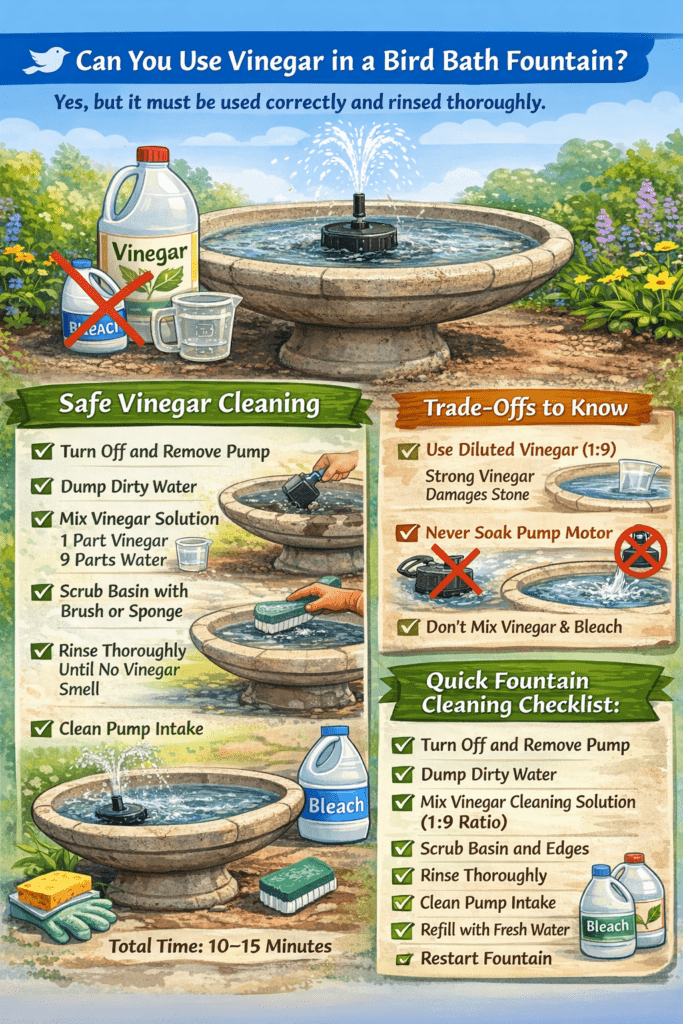
The short answer is yes — vinegar can be used safely in a bird bath fountain, but only if it’s used correctly and rinsed thoroughly before birds return.
Over the years, I’ve cleaned dozens of backyard bird baths and small fountain setups. Vinegar is one of the simplest and safest cleaning solutions available, but it works best when you understand when to use it, how much to use, and what mistakes to avoid.
Let’s walk through how it works and how to use it properly.
Why Vinegar Works Well for Bird Baths
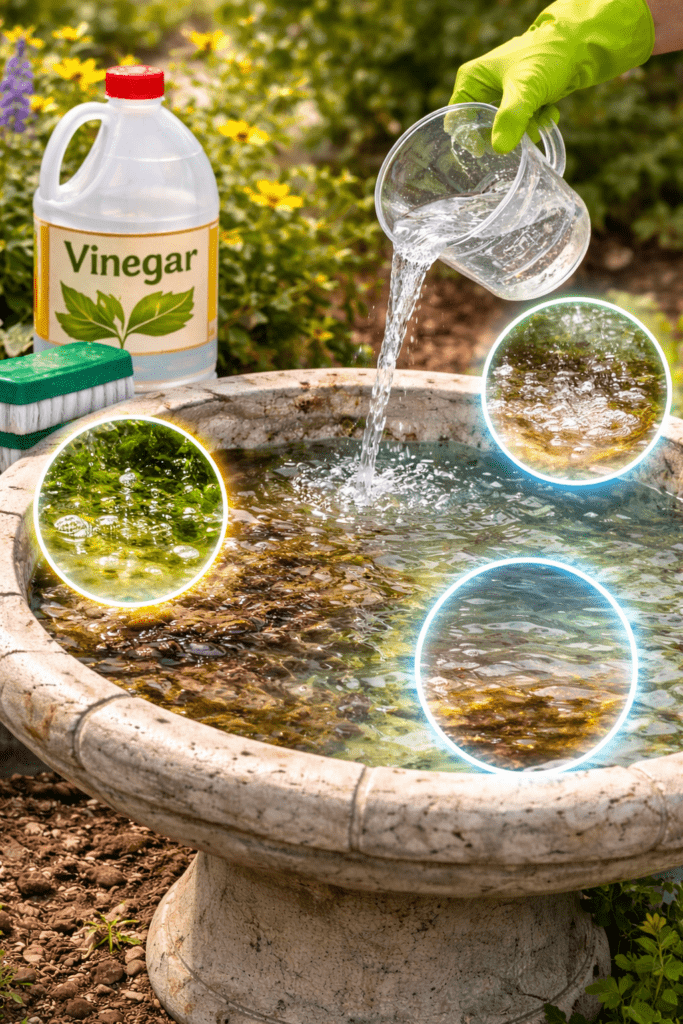
Vinegar is a mild acid (acetic acid) that naturally breaks down many of the things that build up in bird baths.
It helps remove:
- algae residue
- calcium deposits from hard water
- dirt and organic buildup
- cloudy film on the basin
Unlike chemical cleaners, vinegar does not leave toxic residues when properly rinsed. That’s why it’s widely recommended by wildlife organizations and bird habitat experts.
Important Rule: Never Leave Vinegar in the Bird Bath
A common mistake people make is adding vinegar directly to the bird bath water and leaving it there. This is not recommended.
Birds are sensitive to taste and smell, and vinegar can discourage them from bathing or drinking. Instead, vinegar should only be used as a temporary cleaning solution and then completely rinsed away.
Think of vinegar as a cleaning step, not a permanent additive.
The Best Vinegar Cleaning Method
Cleaning a bird bath fountain with vinegar is quick and simple.
Time to complete
10–15 minutes
Step-by-Step Cleaning Process
Step 1: Turn off and remove the pump
Unplug or remove the solar pump and set it aside.
If you’re using a solar pump, you can see a simple setup guide here:
How to Install a Solar Fountain Pump in 10 Minutes.
Step 2: Dump old water
Pour out any dirty water and remove leaves or debris.
Step 3: Mix a vinegar solution
Use the following ratio:
1 part white vinegar
9 parts water
Example:
- 1 cup vinegar
- 9 cups water
This dilution works well without being overly strong.
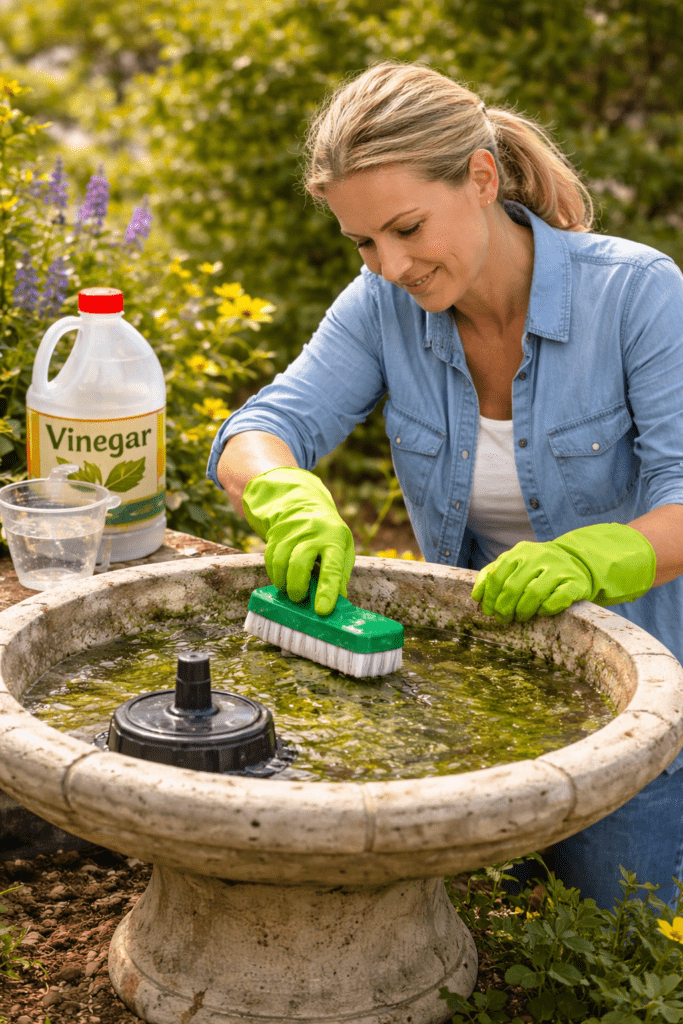
Step 4: Scrub the basin
Use a soft brush or sponge to scrub:
- bird droppings
- algae film
- mineral deposits
Most buildup loosens quickly with vinegar.
Step 5: Rinse thoroughly
This step is critical. Rinse the bird bath two or three times with clean water until the vinegar smell is gone.
Step 6: Clean the fountain pump
Small fountain pumps often collect algae inside the intake. Remove the pump cover and rinse it under clean water.
Step 7: Refill with fresh water
Add clean water and reinstall the pump. Your fountain should be ready for birds again within minutes.
How Often Should You Use Vinegar?
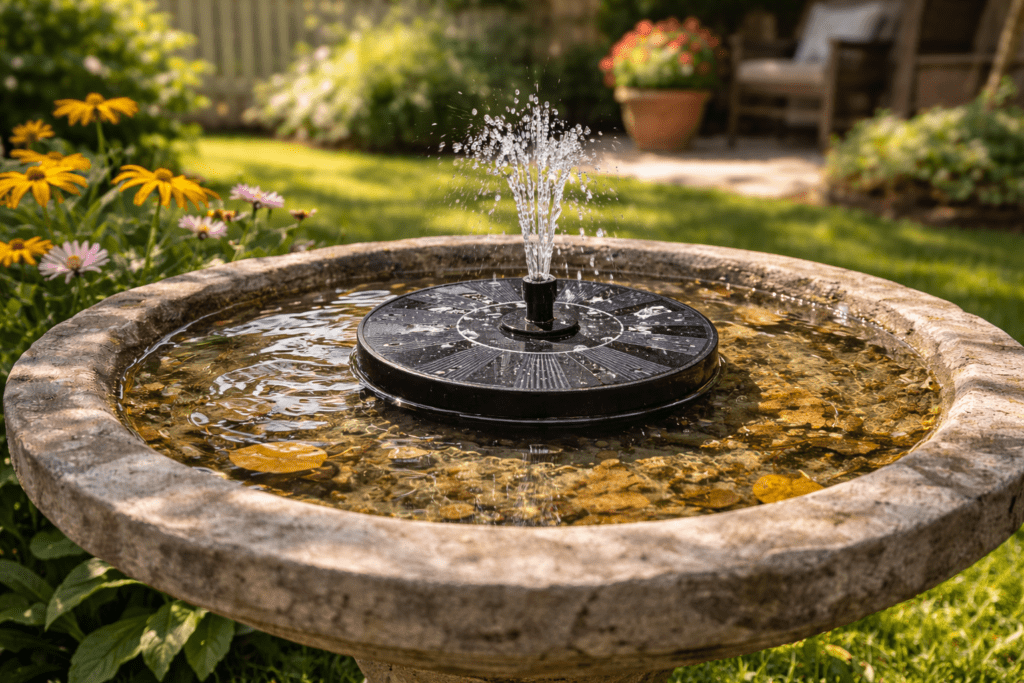
In most backyards, vinegar cleaning works well every 1–2 weeks.
However, frequency depends on:
- sunlight exposure
- temperature
- nearby trees
- bird traffic
Bird baths in full sun tend to grow algae faster. Many bird enthusiasts simply do a quick rinse every few days and reserve vinegar cleaning for deeper cleaning sessions.
Trade-Offs and Risks to Know
Vinegar is generally safe, but there are a few things to keep in mind.
Strong vinegar solutions can damage stone
Natural stone bird baths can slowly erode if exposed to strong acidic solutions repeatedly. Stick with diluted vinegar rather than full-strength vinegar.
Avoid vinegar in pump motors
Do not soak the pump motor in vinegar. This can damage seals and internal components. Instead, rinse pumps with clean water or gently brush away debris.
Avoid mixing vinegar with other cleaners
Never combine vinegar with:
- bleach
- ammonia
- chemical cleaners
These mixtures can create harmful fumes.
Realistic Expectations
Vinegar cleaning is effective, but it is not permanent.
Outdoor bird baths constantly collect:
- pollen
- dust
- algae spores
- bird droppings
That means regular cleaning is simply part of maintaining a healthy bird bath.
The good news is that once a fountain is established, moving water slows algae growth significantly. If you’re considering adding water movement, you can explore options here.
Printable Bird Bath Cleaning Checklist

Quick Fountain Cleaning Routine
✔ Turn off and remove pump
✔ Dump dirty water
✔ Mix vinegar cleaning solution (1:9 ratio)
✔ Scrub basin and edges
✔ Rinse thoroughly
✔ Clean pump intake
✔ Refill with fresh water
✔ Restart fountain
Total time: 10–15 minutes
Keeping this checklist near your garden tools makes regular cleaning much easier.
Frequently Asked Questions
Is vinegar safe for birds?
Yes, vinegar is safe when used as a cleaning agent and rinsed away completely before refilling the bath.
Can vinegar prevent algae growth?
Not permanently. Vinegar removes algae during cleaning, but algae will return over time in outdoor water. Moving water and regular cleaning help reduce it.
Can I add vinegar to bird bath water to keep it clean?
No. Vinegar should never remain in the water that birds drink or bathe in. Always rinse thoroughly before refilling.
Is bleach better than vinegar?
Bleach can disinfect more aggressively, but it must be diluted carefully and rinsed extremely well. For most backyard bird baths, vinegar is the simpler and safer choice.
Does moving water keep bird baths cleaner?
Yes. Fountains and bubblers improve water circulation, which slows algae growth and attracts more birds.
Reputable Resources for Bird Bath Care
For more guidance on maintaining bird-friendly water sources:
- National Audubon Society – Bird Bath Tips
- Cornell Lab of Ornithology – Backyard Bird Habitat Advice
- National Wildlife Federation – Creating Wildlife Gardens
These organizations provide trusted guidance on supporting backyard birds safely.
Final Thoughts
Using vinegar to clean a bird bath fountain is one of the simplest ways to keep your setup safe and inviting for birds.
The key is remembering three things:
- Use diluted vinegar
- Scrub thoroughly
- Rinse completely
When combined with moving water and regular maintenance, a clean bird bath fountain can become one of the most active and enjoyable features in your backyard.
And once birds discover a reliable water source, they’ll return again and again—especially during hot summer months when fresh water is hardest to find.