
If you’ve ever filled a bird bath in the morning and found it nearly empty by late afternoon, you’re not imagining things. In hot, sunny climates, bird baths can lose several inches of water per day from evaporation alone.
After setting up and maintaining backyard water features for years, I’ve learned that evaporation is one of the biggest hidden challenges with bird baths—especially in summer. The good news is that a few small changes can dramatically slow water loss while still keeping the bath attractive to birds.
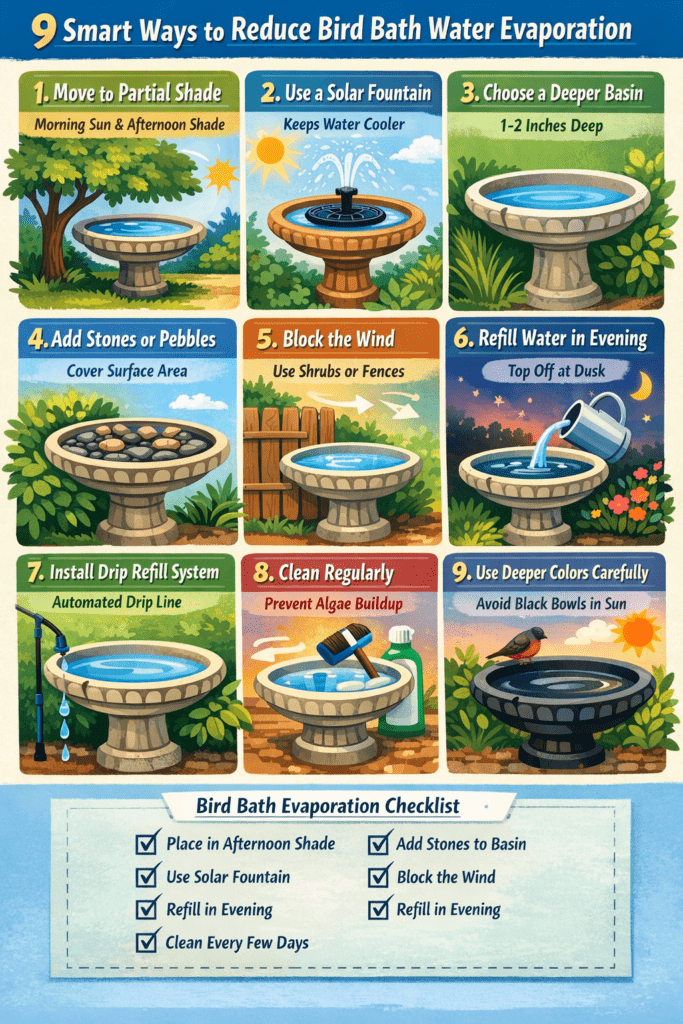
Let’s walk through the smartest ways to reduce evaporation without turning your bird bath into a maintenance headache.
Why Bird Baths Lose Water So Quickly
Before trying to fix the problem, it helps to understand what causes it.
Evaporation speeds up when three conditions combine:
- Direct sunlight
- Warm air temperatures
- Moving air (wind)
A shallow bird bath sitting in full afternoon sun is basically the perfect evaporation machine.
In many backyards, evaporation—not birds drinking—is responsible for 80–90% of water loss.
1. Move the Bird Bath to Partial Shade
This is the easiest and most effective solution. A bird bath placed in morning sun and afternoon shade can reduce evaporation dramatically.
Ideal placement
- Morning sunlight (helps birds feel safe)
- Afternoon shade (reduces heat buildup)
- Near shrubs or small trees
This placement also encourages more bird visits.
The National Audubon Society recommends locating bird baths near cover so birds can escape predators while still having a clear view of the area.
Time to complete: 5–10 minutes
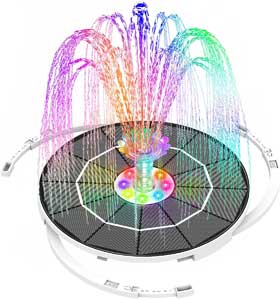
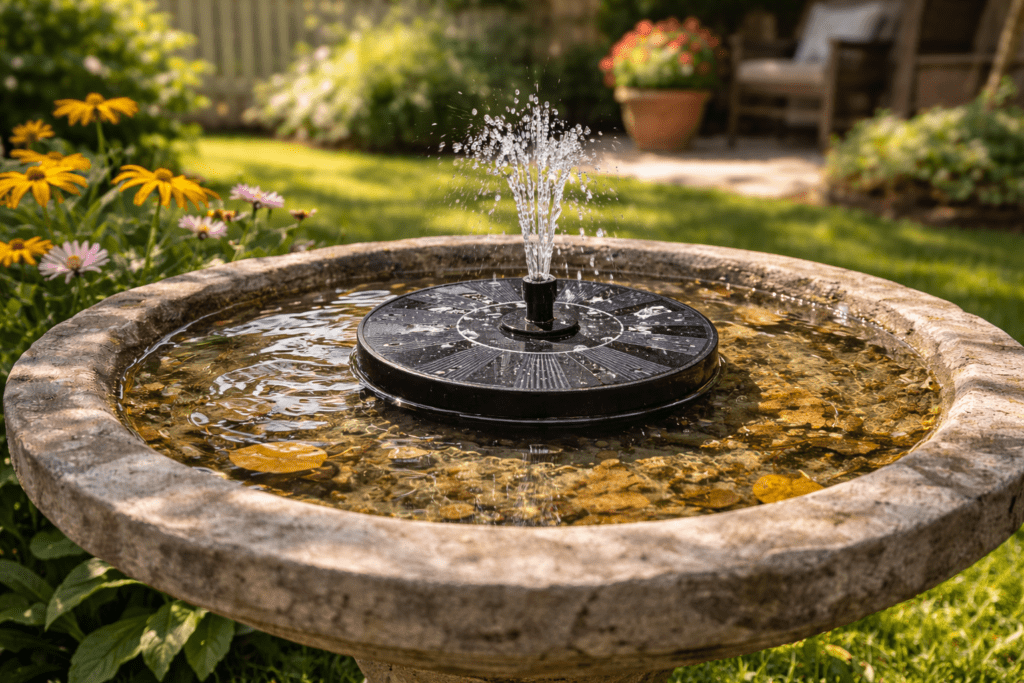
2. Use a Solar Fountain Pump
Moving water can actually help reduce evaporation slightly because it cools the water surface and attracts birds quickly so the bath stays fresh. Solar fountains also encourage birds to use the bath sooner instead of letting water sit and heat up.
If you want a quick installation guide, see:
https://www.birdbathbubbler.com/install-solar-fountain-pump/
Or compare different options here:
https://www.birdbathbubbler.com/solar-fountains-for-bird-baths/
Trade-off: fountains can cause minor splash-out depending on nozzle height.
Time to install: 10 minutes
3. Choose a Deeper Bird Bath Basin
Shallow decorative bowls look nice but evaporate quickly.
Ideal depth for bird baths
- 1–2 inches in the center
- Gradual slope toward edges
A slightly deeper basin holds more water and heats up slower.
You can see recommended depths here:
https://www.birdbathbubbler.com/bird-bath-depth-for-fountain-pump/
4. Add Small Stones or Pebbles
Stones do two useful things:
- Reduce exposed water surface area
- Provide perches for birds
Less exposed surface means less evaporation.
Best approach
Use smooth river stones arranged so birds still have access to shallow water.
Time to complete: 2 minutes
5. Use a Bird Bath with a Dark Interior Carefully
Darker bowls absorb heat faster, which increases evaporation. However, there’s a trade-off. Birds often prefer darker interiors because they can see water reflections more clearly.
Best compromise
- Neutral or stone colors
- Avoid black metal bowls in full sun
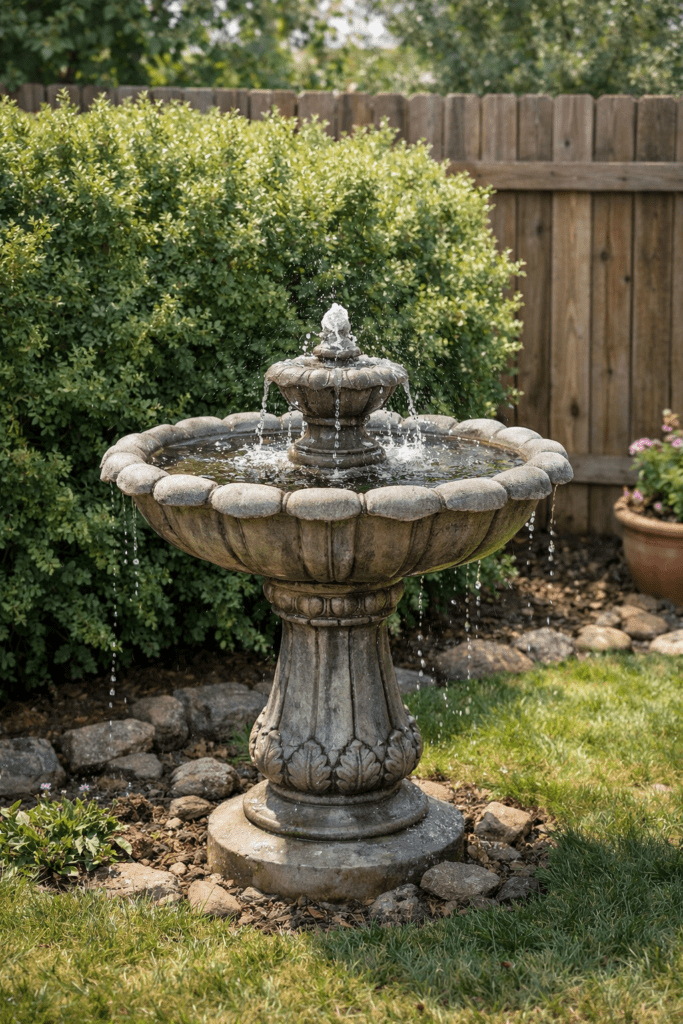
6. Reduce Wind Exposure
Wind dramatically increases evaporation. If your bird bath sits in an open yard, consider placing it:
- Near a fence
- Next to shrubs
- Inside a garden bed
Even small wind barriers can slow evaporation noticeably.
Time to complete: 5–15 minutes depending on relocation.
7. Top Off Water in the Evening
If you refill the bird bath in the morning, much of that water evaporates during peak heat. Instead, refill in the evening so birds have a full bath the following morning.
This simple change often cuts water loss significantly.
8. Install a Small Drip Refill System
If evaporation is severe, a slow drip can maintain water level automatically. A simple drip line or bottle system can keep the basin filled without constant refilling.
This works especially well in hot climates like California or Arizona.
9. Clean the Bird Bath Regularly
Algae and debris can trap heat in the basin and accelerate evaporation. A quick cleaning every few days keeps water cooler and more appealing to birds. If you want a simple cleaning method, click here.
Time to complete: 3–5 minutes

Printable Checklist: Reduce Bird Bath Evaporation
Print this and keep it near your garden tools.
Bird Bath Evaporation Prevention Checklist
- Place bird bath in morning sun / afternoon shade
- Position near shrubs or trees
- Add stones or pebbles to basin
- Use deeper bird bath design
- Reduce wind exposure
- Install solar fountain pump
- Refill water in evening
- Clean basin every few days
Realistic Expectations
Even with the best setup, bird baths will still lose water in hot weather.
Typical summer evaporation:
| Temperature | Water Loss |
|---|---|
| 75°F | ¼ inch per day |
| 85°F | ½ inch per day |
| 95°F | 1 inch or more per day |
The goal isn’t eliminating evaporation completely—it’s slowing it enough that your bird bath stays functional longer between refills.
Frequently Asked Questions
How often should I refill a bird bath?
During hot summer weather, most bird baths should be refilled every 1–2 days.
Do fountains increase evaporation?
They can cause minor splash loss, but the cooling effect and bird activity often offset this.
Should bird baths be in full sun?
Partial sun is better. Full afternoon sun can dramatically increase evaporation.
Does deeper water attract birds?
Birds prefer shallow edges but benefit from deeper centers that maintain water levels longer.
Can I cover my bird bath to prevent evaporation?
Covering it will stop evaporation, but it also prevents birds from using it. Instead, focus on shade and placement.
Resources
National Audubon Society – Bird Bath Placement
https://www.audubon.org/news/how-make-birdbath
Cornell Lab of Ornithology – Backyard Bird Habitat Tips
https://www.birds.cornell.edu/home/get-involved/10-ways-to-help-birds/
National Wildlife Federation – Wildlife Garden Advice
https://www.nwf.org/Garden-for-Wildlife
Final Thoughts
Bird baths are one of the easiest ways to bring life into a backyard, but evaporation can make them feel like a constant chore to maintain.
Fortunately, most evaporation problems come down to placement and design. Moving a bird bath into partial shade, reducing wind exposure, and choosing the right basin depth can dramatically extend how long water lasts.
Add a solar fountain or simple refill system, and your bird bath can stay active with surprisingly little effort.
Once birds start visiting regularly, you’ll quickly see why even a small backyard water feature can become the most active spot in your garden.