
One of the most common mistakes people make when installing a fountain pump in a bird bath is assuming that any bird bath will work. In reality, depth matters—a lot.
Too shallow and the pump runs dry within minutes. Too deep and birds avoid the bath entirely. The sweet spot is a balance between bird safety, pump performance, and splash control.
After helping countless homeowners set up small birdbath fountains, the most reliable setups almost always fall within a narrow range of depths. If you’re installing a fountain pump for the first time, getting this one detail right will save you a lot of frustration.
This guide will walk through the ideal depth, how to measure it, and how to adjust your bird bath if it isn’t perfect.
The Ideal Bird Bath Depth for a Fountain Pump
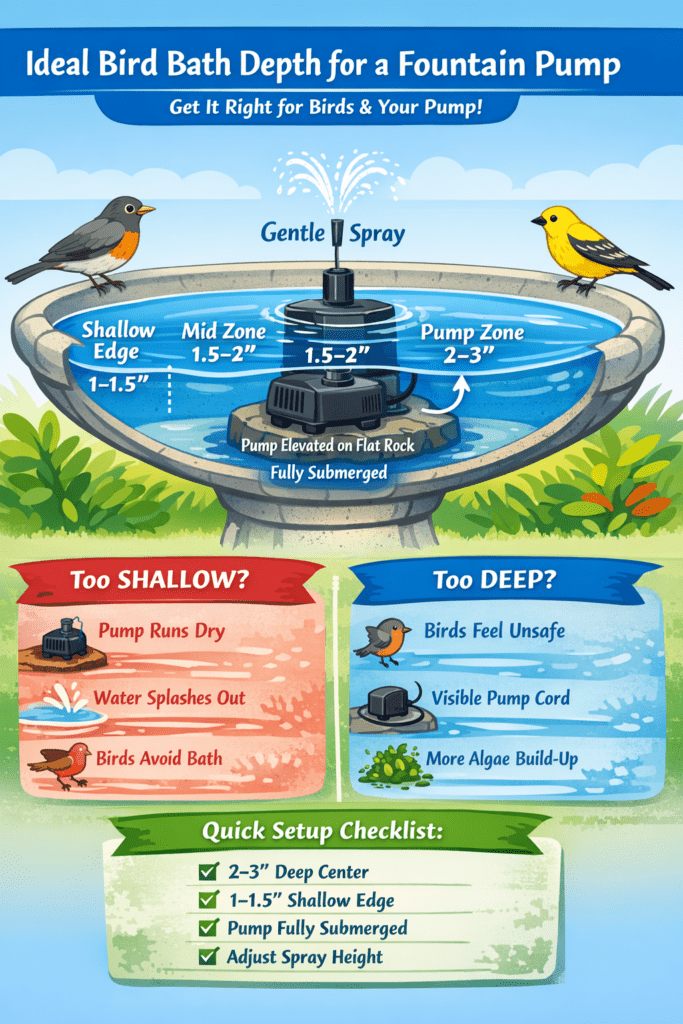
For most backyard bird baths with a small fountain pump, the ideal depth looks like this:
| Area of Bird Bath | Ideal Depth |
|---|---|
| Outer edge (where birds stand) | 1–1.5 inches |
| Mid zone | 1.5–2 inches |
| Center (where pump sits) | 2–3 inches |
This gradual slope works best for both birds and pumps.
Why this depth works
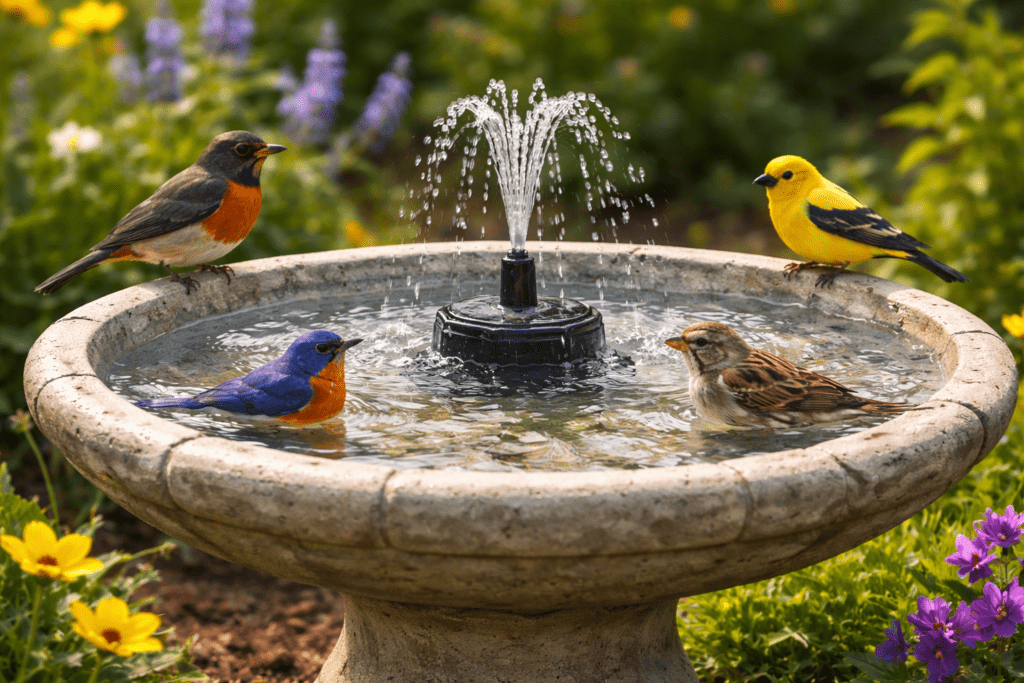
Birds prefer shallow water.
Most backyard birds only bathe in 1–2 inches of water. Anything deeper makes them feel vulnerable to predators.
The pump needs enough water to stay submerged.
Small bird bath pumps typically require 2 inches of water minimum to avoid running dry.
The fountain spray stays contained.
When the basin is deep enough, splashing water stays inside the bath instead of draining onto the ground.
If you’re installing a floating solar fountain, the depth requirement is usually similar. You can see installation examples in this guide.
What Happens If the Bird Bath Is Too Shallow?
This is actually the most common problem people run into.
Problems caused by shallow bird baths
1. The pump sucks in air
When water gets low, the pump begins pulling in air. This causes:
- sputtering fountain spray
- noisy pump operation
- pump overheating
Running dry is one of the fastest ways to destroy a small fountain pump.
2. Water splashes out quickly
Many decorative nozzle heads spray water upward. If the basin is shallow, the spray exits the bird bath completely.
This leads to:
- constant refilling
- dry pump damage
- muddy ground around the bath
3. Birds may avoid it
Birds actually prefer gradual water depth so they can walk into the bath slowly. A shallow flat basin doesn’t give them that option.
What Happens If the Bird Bath Is Too Deep?
You might assume deeper is better for a pump, but that can backfire.
Potential issues with deep bird baths
Birds feel unsafe
Birds like robins, sparrows, and finches usually avoid water deeper than 2–2.5 inches unless they can stand safely.
Pump cords become visible
Deeper baths can expose the pump cord and make the fountain look cluttered.
More algae growth
Deeper water warms slower but holds more organic material, which can increase algae buildup if water circulation is weak.
How to Fix Bird Baths That Are Too Deep
The easiest solution is simply raising the pump.
Many backyard setups use a simple trick:
Place the pump on a platform
You can elevate the pump using:
- flat river rocks
- a small ceramic tile
- a plastic plant saucer
- stacked stones
The goal is to position the pump intake about 2 inches below the water surface. This keeps the pump submerged while keeping the bath shallow enough for birds. You can see pump placement examples in this guide here.
How to Fix Bird Baths That Are Too Shallow
If your basin is only 1–1.5 inches deep, you still have options.
Option 1: Use a floating solar fountain
Floating fountains sit directly on the water surface and don’t require pump placement depth.
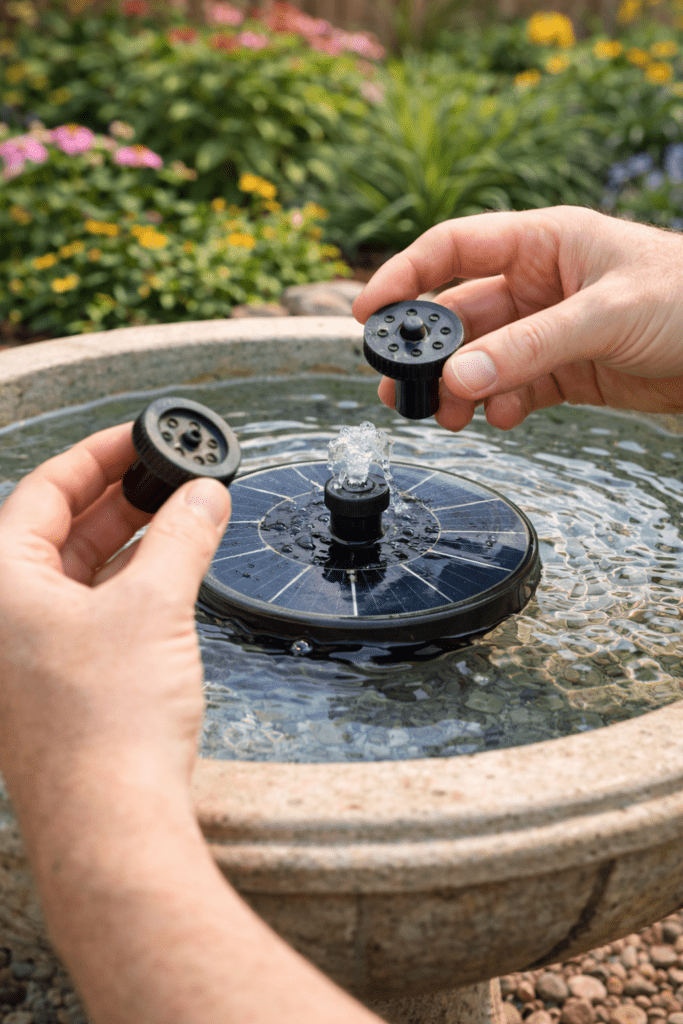
They work best in:
- shallow bird baths
- glass bowls
- small decorative fountains
Option 2: Reduce spray height
Switch to a lower spray nozzle head so water stays inside the basin. You can see nozzle adjustment examples in this tutorial here.
Option 3: Add splash guards
Simple splash guards include:
- decorative rocks
- glass pebbles
- a small ring of stones
These help redirect water back toward the center.
Realistic Expectations When Using Bird Bath Fountain Pumps
Many people imagine dramatic fountain sprays like garden fountains, but bird baths work best with gentle bubbling or small sprays.
A realistic fountain setup should:
- circulate water quietly
- create light movement
- avoid spraying outside the basin
Small bird bath pumps usually range from 40–120 GPH (gallons per hour). Anything stronger tends to cause splash-out unless the basin is very large.
Typical Time to Install a Fountain Pump
| Task | Time |
|---|---|
| Clean the bird bath | 5 minutes |
| Position the pump | 2 minutes |
| Adjust spray nozzle | 2 minutes |
| Fill with water | 1 minute |
Total time: about 10 minutes

Printable Bird Bath Fountain Setup Checklist
✔ Bird bath center depth 2–3 inches
✔ Outer edge depth 1–1.5 inches
✔ Pump fully submerged
✔ Spray height adjusted to prevent splash-out
✔ Pump placed on flat stable surface
✔ Clean water added
✔ Bird bath placed in partial sun
Keeping this checklist handy makes seasonal fountain setup much easier.
Frequently Asked Questions
Do birds prefer moving water in bird baths?
Yes. Moving water attracts birds much more effectively than still water. The sound and motion signal that the water is fresh and safe.
Can a fountain pump run continuously?
Most small pumps are designed to run continuously, but they should never run dry. Keeping the bath topped off is essential during hot weather.
How often should bird bath water be changed?
Ideally every 1–2 days, especially in warm weather. Fresh water keeps birds healthy and reduces algae buildup.
Are solar fountain pumps powerful enough?
For bird baths, yes. Solar pumps are usually the easiest option since they don’t require electrical cords.
What size pump works best for bird baths?
Most bird baths perform best with 40–80 GPH pumps. Larger pumps often create too much spray.
Resources for Bird Bath & Backyard Bird Care
For additional bird habitat guidance:
- National Audubon Society – Birdbath Placement Tips
- Cornell Lab of Ornithology – Backyard Bird Habitat Guides
- National Wildlife Federation – Wildlife Garden Planning
These organizations offer reliable guidance for creating bird-friendly backyard habitats.
Final Thoughts
If you remember just one thing, it’s this:
The best bird bath depth for a fountain pump is about 2–3 inches in the center and 1–1.5 inches at the edges.
This simple depth range keeps pumps safe while giving birds the shallow water they prefer for bathing. Once the depth is right, most backyard fountains take only 10 minutes to set up, and they can dramatically increase the number of birds visiting your yard.
And when you combine the right depth with gentle water movement, clean water, and good placement, your bird bath quickly becomes one of the busiest spots in your garden.