
Small backyard ponds are sneaky. They look simple… until you realize the “pond pump” is basically the heart, lungs, and immune system all in one.
I’ve seen plenty of tiny ponds look amazing for two weeks and then slowly slide into the classic combo platter of green water + slime + a pump that’s “running” but not actually moving water. The fix usually isn’t a total redesign. It’s choosing a mini pump that’s actually matched to your pond’s size, head height, and debris reality.
This guide is for small ponds, container ponds, preformed ponds, and mini water gardens—the kind you can build in a weekend, enjoy all summer, and not constantly babysit.
If you’re already using a bird bath bubbler and want similar low-hassle reliability, these two are worth bookmarking too:
The 3 “Mini Pond Pump” Jobs (Pick Yours First)
Mini pumps usually do one (or more) of these:
- Circulation (keep water moving and healthier)
- Filtration (feed a filter box or sponge filter)
- Aesthetic flow (little waterfall, spitter, or fountain head)
Your pump choice changes depending on which job matters most.
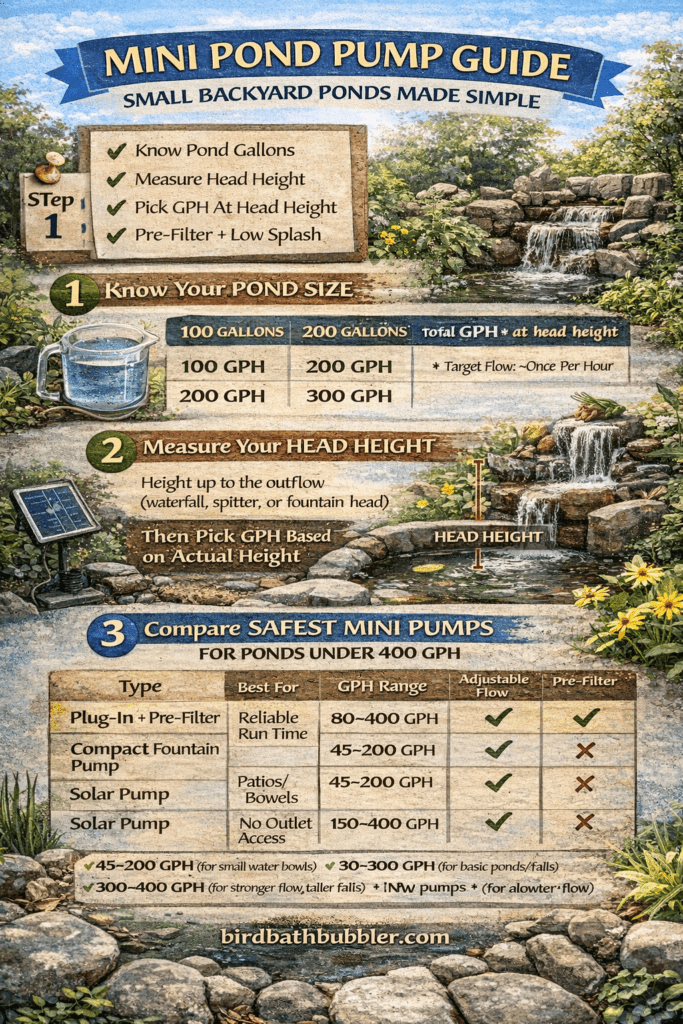
Step 1: Size the Pump the Right Way (GPH That Makes Sense)
For basic circulation
A common rule of thumb is to turn the pond volume over at least once per hour for smaller shallow ponds, and roughly once every 2 hours for larger volumes.
Quick math:
- 100-gallon pond → target ~100 GPH (at your actual head height)
- 200-gallon pond → target ~200 GPH
- 300-gallon pond → target ~300 GPH
For a waterfall or spillway
Waterfalls need more flow than “keep it fresh” circulation. One practical guideline is sizing by spillway width (gallons per hour per inch) and then adjusting for head height and tubing friction.
Reality check: A pump advertised as “400 GPH” is usually measured at 0 ft head (best-case). If your waterfall lip is 2–3 feet above the waterline, your real flow may be a lot lower.
Step 2: Don’t Ignore Head Height (Where Most People Mess Up)
Head height = the vertical lift from the pond surface to your highest outlet (waterfall lip, spitter, fountain head).
Then add friction losses from tubing—many guides suggest adding a bit of extra “effective head” for longer tubing runs.
What this means in plain English:
If you undersize the pump, you won’t get “a small waterfall.” You’ll get “a damp rock that looks disappointed.”
The Best Mini Pump Types for Small Backyard Ponds
1) Most Reliable & Low Maintenance: Plug-In Submersible Pump + Pre-Filter
If you want the least drama, this is it.
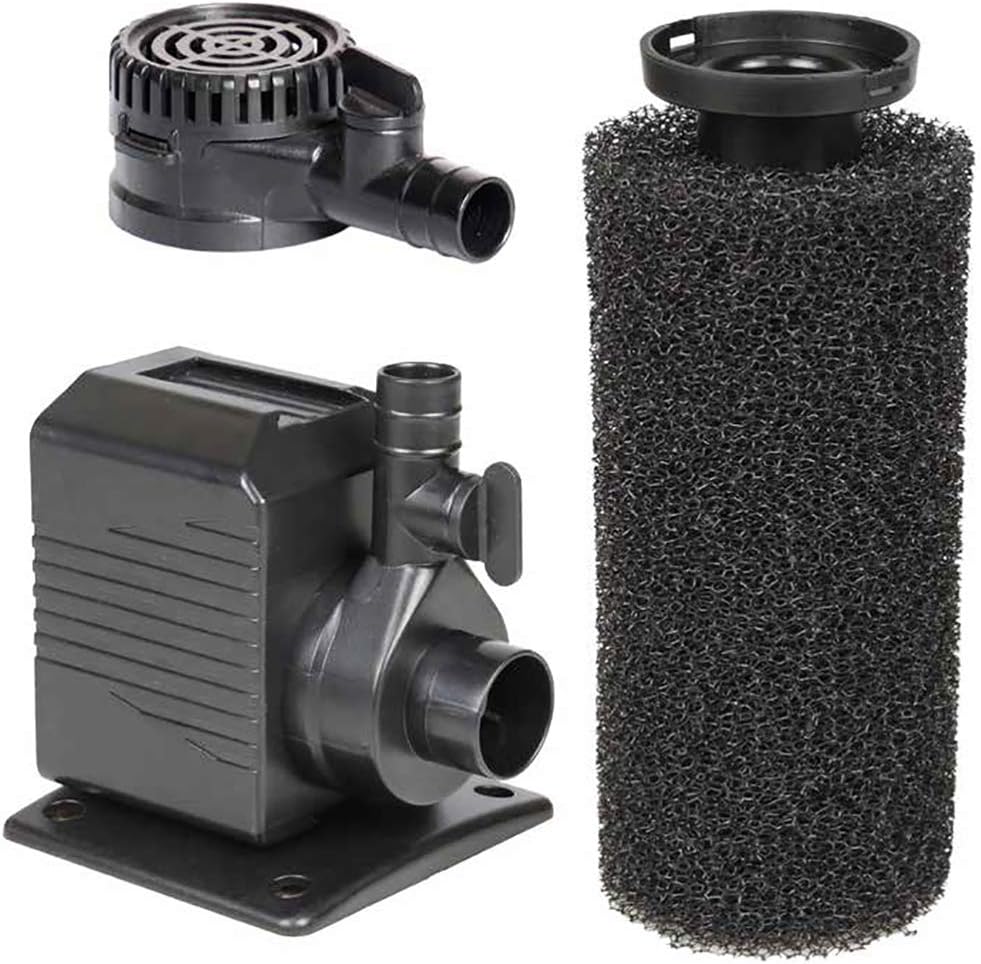
Why it’s great:
- Consistent power (runs even when clouds roll in)
- Usually better build quality than ultra-cheap micro pumps
- Can drive a small filter or waterfall reliably
Trade-offs:
- Needs a GFCI outdoor outlet
- You’ll manage a cord (easy to hide with edging or a rock channel)
Time to complete: 30–60 minutes
(Place pump, connect tubing, route cord, adjust flow)
This pairs perfectly with the “don’t clog” approach:
👉 Reliable Pumps That Don’t Clog
2) Best for Container Ponds: Compact Fountain Pump (45–200 GPH Range)
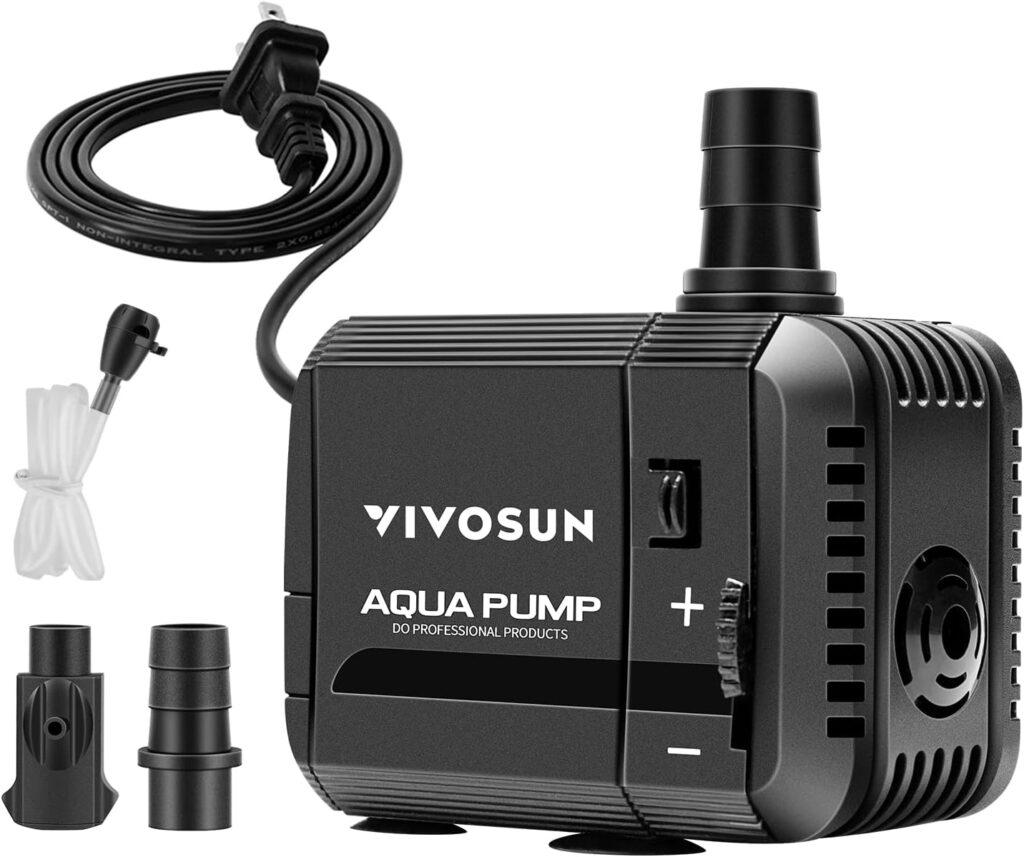
For small bowls, whiskey barrel ponds, and micro features, a compact fountain pump is often enough.
Some pump sizing guides categorize small fountain pumps by lift height and GPH ranges (for example, ~45–155 GPH for low lift applications).
Why it’s great:
- Cheap and compact
- Easy to clean
- Perfect for gentle movement and sound
Trade-offs:
- Not ideal for leaf-heavy yards unless you add a pre-filter
- Can burn out faster if run dry
Time to complete: 20–40 minutes
(Place pump, set nozzle or tubing, dial down spray, test)
3) Best “No-Cord” Option: Solar Pump With External Panel
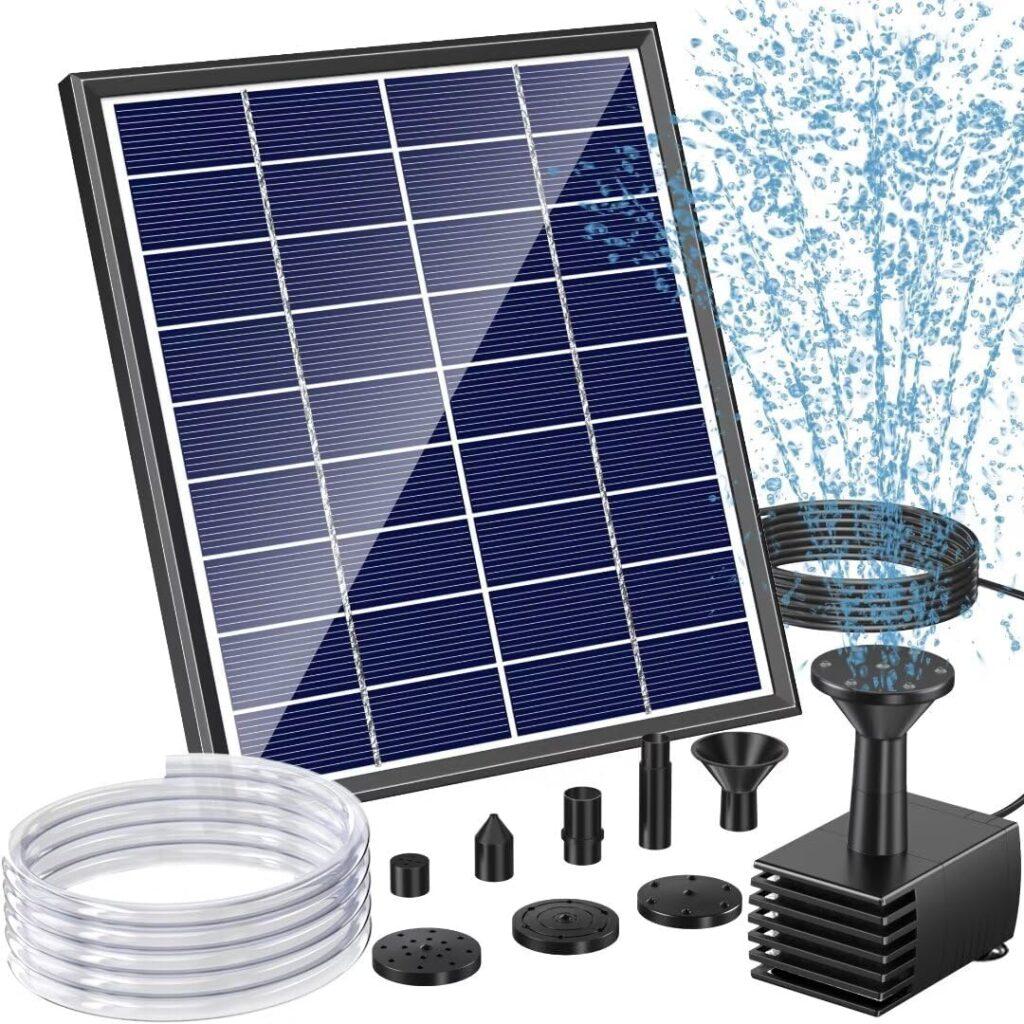
If you hate cords, solar can work—especially the external panel type.
Why it’s great:
- Cleaner look
- Flexible placement (panel can sit in sun even if pond is partially shaded)
Trade-offs (be honest with yourself):
- Performance depends on sun exposure
- Can stop or weaken on cloudy days
- Usually not as strong for waterfalls unless you buy higher-end models
Time to complete: 20–45 minutes
(Place pump, stake panel, route cable neatly)
If you’re weighing this trade-off, use:
👉 Solar vs Plug-In Fountain Pumps
What to Look For (So You Don’t Buy Twice)
✅ A real pre-filter or sponge wrap
This is your #1 clog prevention tool.
✅ Adjustable flow
It’s easier to throttle down than to fix an underpowered pump.
✅ Easy access to the impeller area
If you can open it quickly, you’ll maintain it.
✅ Low-water protection (optional but nice)
Some pumps include low-water shut-off features in certain models/lines.
Mosquito and “Stagnant Water” Reality Check
If your pond water sits still, it becomes a mosquito opportunity. Many local vector control agencies emphasize removing standing water and keeping water circulating/maintained to reduce breeding risk.
Translation: a mini pump isn’t just for looks—it’s part of keeping the system healthier.
Printable Checklist: Mini Pond Pump Buying + Setup

Before you buy
☐ Know your pond gallons (rough estimate is fine)
☐ Decide the goal: circulation / filter / waterfall / fountain
☐ Measure head height (waterline → outlet)
☐ Choose a pump that hits your target at your head height
☐ Pick adjustable flow + pre-filter option
☐ Plan cord routing (or panel placement if solar)
After you install
☐ Rinse the pre-filter weekly (1–3 minutes)
☐ Top off water so pump never runs dry
☐ Clean pump monthly (10 minutes)
☐ Reduce splash to reduce evaporation
Frequently Asked Questions
What GPH pump do I need for a 150-gallon pond?
A simple target is ~150 GPH at your actual head height for basic circulation. For waterfalls, you’ll usually need more, and head height matters a lot.
Is a solar pump strong enough for a small waterfall?
Sometimes—but it’s more hit-or-miss. External panel solar pumps are better than floating units. If you want consistency, plug-in pumps win.
How often should I clean a mini pond pump?
Quick pre-filter rinse weekly, deeper clean monthly. If you have heavy leaf drop, you’ll rinse more often.
Can a pump run 24/7?
Yes—many people run pond circulation continuously. Just make sure it’s properly installed, submerged, and connected to a GFCI outlet.
What causes mini pumps to fail early?
Running dry (low water), clogged intake, and cheap motors are the big three.
Resources for More Information
- EPA mosquito control basics (standing water guidance): https://www.epa.gov/mosquitocontrol
- National Audubon Society (creating bird-friendly yards): https://www.audubon.org
- Cornell Lab of Ornithology (bird habitat and water tips): https://www.allaboutbirds.org
Conclusion: The Best Mini Pump Is the One That Matches Your “Real” Setup
Mini ponds are forgiving—until they aren’t. The difference between a pond you enjoy and a pond you resent is usually:
- correct pump sizing (GPH + head height)
- a basic pre-filter so it doesn’t clog
- realistic maintenance you’ll actually do
If you want the easiest long-term win, go plug-in submersible with a pre-filter and adjustable flow. If you’re cord-averse, solar can work, but plan for weather variability.
And if your main pain point is clogging (it usually is), don’t skip this next:
👉 Reliable Pumps That Don’t Clog