
If you’ve ever bought a cute little fountain pump, set it in your bird bath, and thought “this is going to be amazing”… only to find it sputtering, slowing down, or flat-out stopping a few days later — welcome to the club.
Clogging is the #1 reason people give up on bird bath bubblers.
Not because they hate birds. Not because they don’t like the idea. But because they don’t want another tiny “project” that needs constant babysitting.
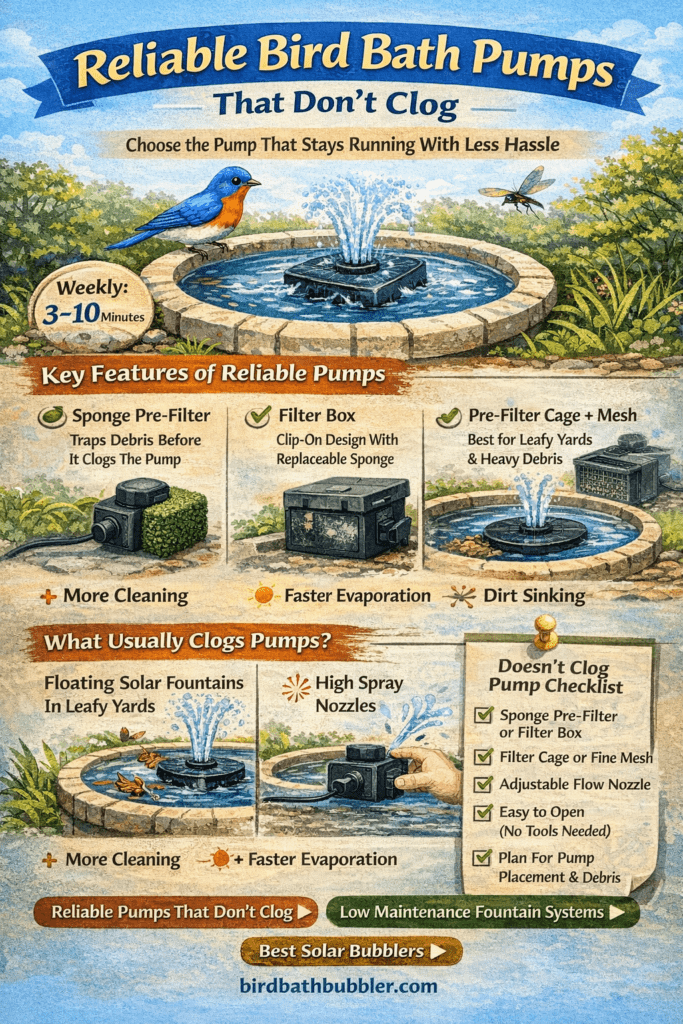
The good news: you can absolutely get a pump that runs reliably with minimal fuss. You just need to choose the right style and build in a little protection (think: filters, screens, and smart placement).
This guide will show you what actually works — and what tends to clog no matter how optimistic the product description is.
If you’re brand new to bubblers, start here first:
👉 Bird Bath Bubblers Made Simple
And if you’re deciding between power sources:
👉 Solar vs Plug-In Fountain Pumps
What Makes a Pump “Reliable” (In Real Life)
A pump doesn’t clog because it’s “bad.” It clogs because your yard is full of:
- pollen
- tiny leaf bits
- bird feathers
- dust
- algae film
- mosquito larvae (in still water)
- grit and sediment
A reliable pump is one that can handle that world without quitting.
Here’s what matters most:
1) A Real Intake Filter (Not Just a Slotted Plastic Cage)
Look for:
- sponge pre-filter
- filter box
- intake screen with fine mesh
2) Enough Flow to Push Through Light Debris
Low power pumps can get “choked” easily. A little extra flow helps.
3) Easy-to-Clean Design
If cleaning takes 30 seconds, you’ll do it.
If it takes tools, disassembly, and swearing, you won’t.
4) The Right Pump Type for Your Setup
Floating solar fountains clog differently (and more often) than submersible pumps with a proper filter.
The Most Reliable Pump Styles That Don’t Clog
I’m not going to pretend any pump is truly “never-clean” — but these are the styles that consistently behave the best.
✅ Best Overall: Submersible Pump + Sponge Pre-Filter
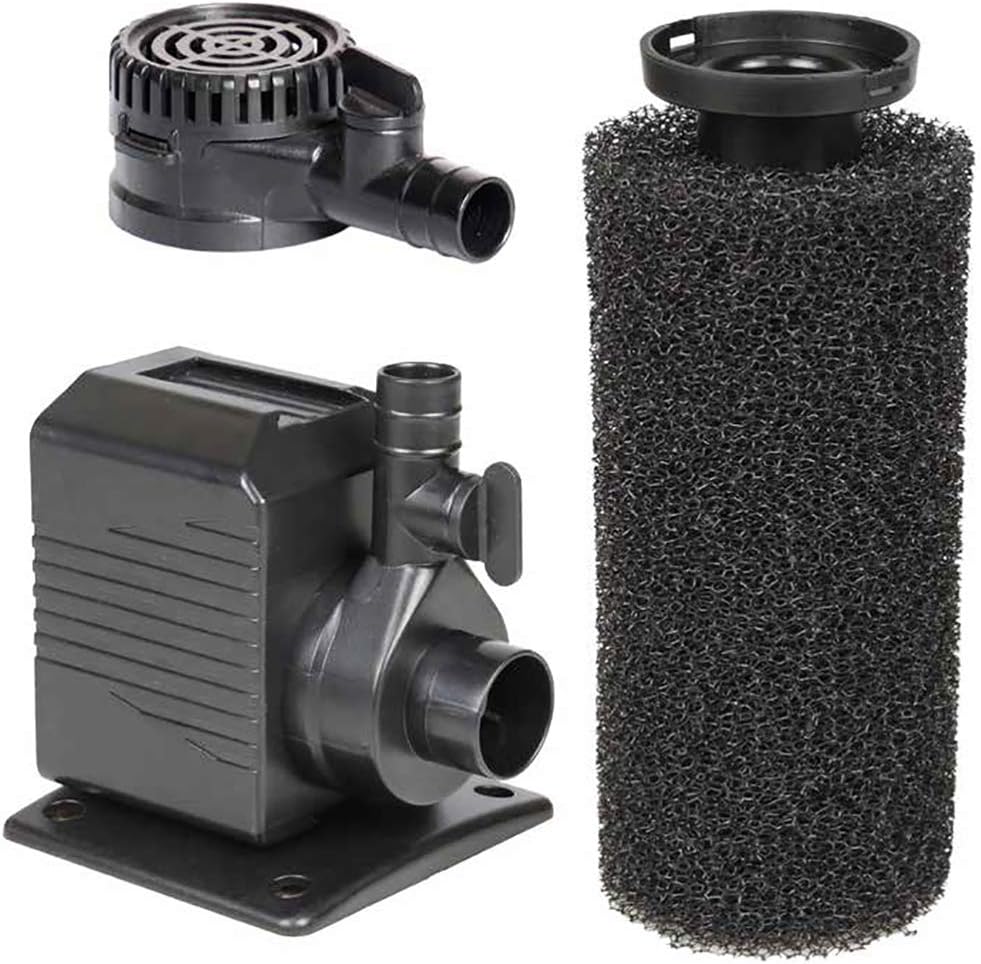
Why it’s reliable: the sponge catches pollen and grit before it hits the impeller.
Best for:
- bird baths in leafy yards
- people who want set-and-forget reliability
- shaded yards where solar is inconsistent
Time to set up: 15–30 minutes
(plug it in, set the pump, route the cord, adjust the nozzle)
If you’re unsure whether plug-in is right for you:
👉 Compare Solar vs Plug-In Fountain Pumps
✅ Most Low-Maintenance Solar: External Panel Solar Pump + Filter Box
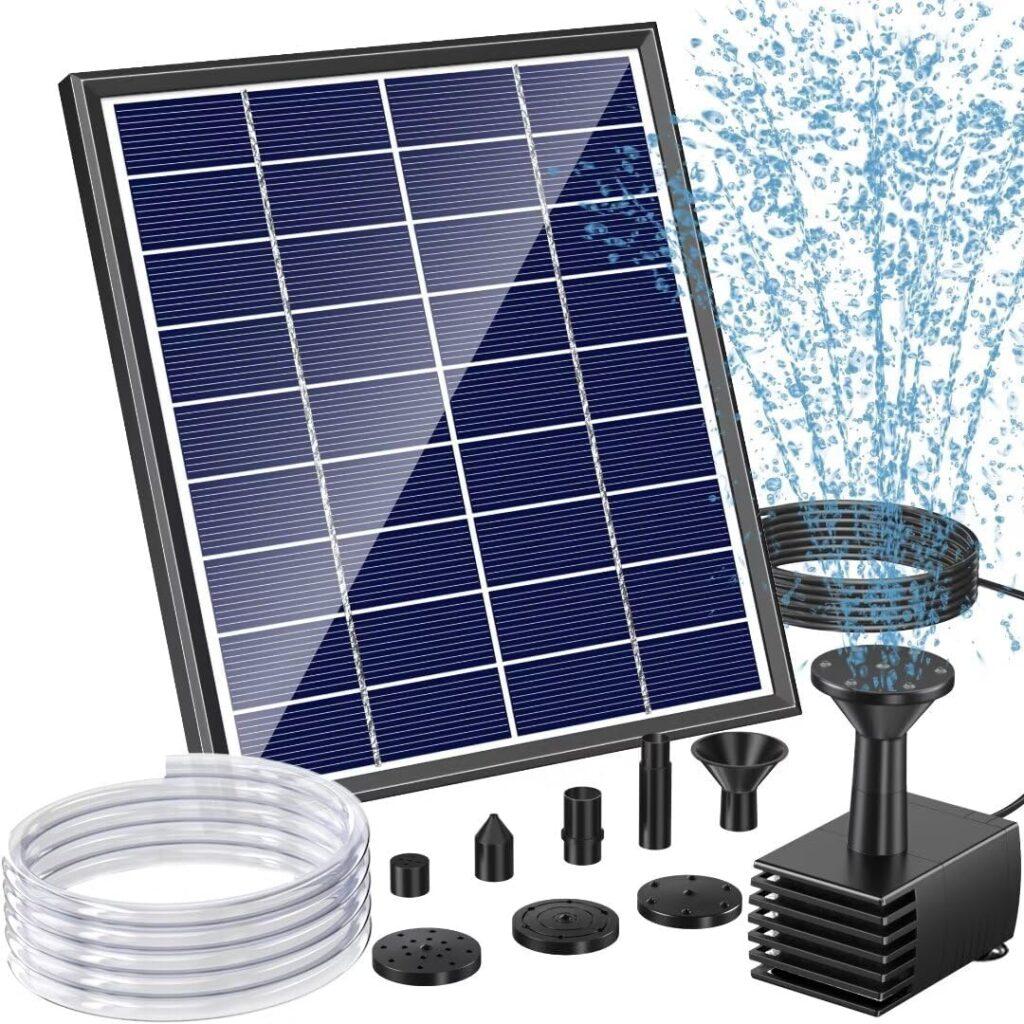
Why it’s reliable: better power stability + better filtration.
Floating solar fountains are convenient… but they often have minimal filtration and clog fast.
External panel systems tend to:
- run more consistently
- provide stronger flow
- support better intake protection
Time to set up: 10–20 minutes
(place panel, run cord to pump, set nozzle)
For low-hassle setups:
👉 Best Low Maintenance Fountain Systems
✅ Best for Debris Protection: Pump With Pre-Filter Cage + Mesh Screen
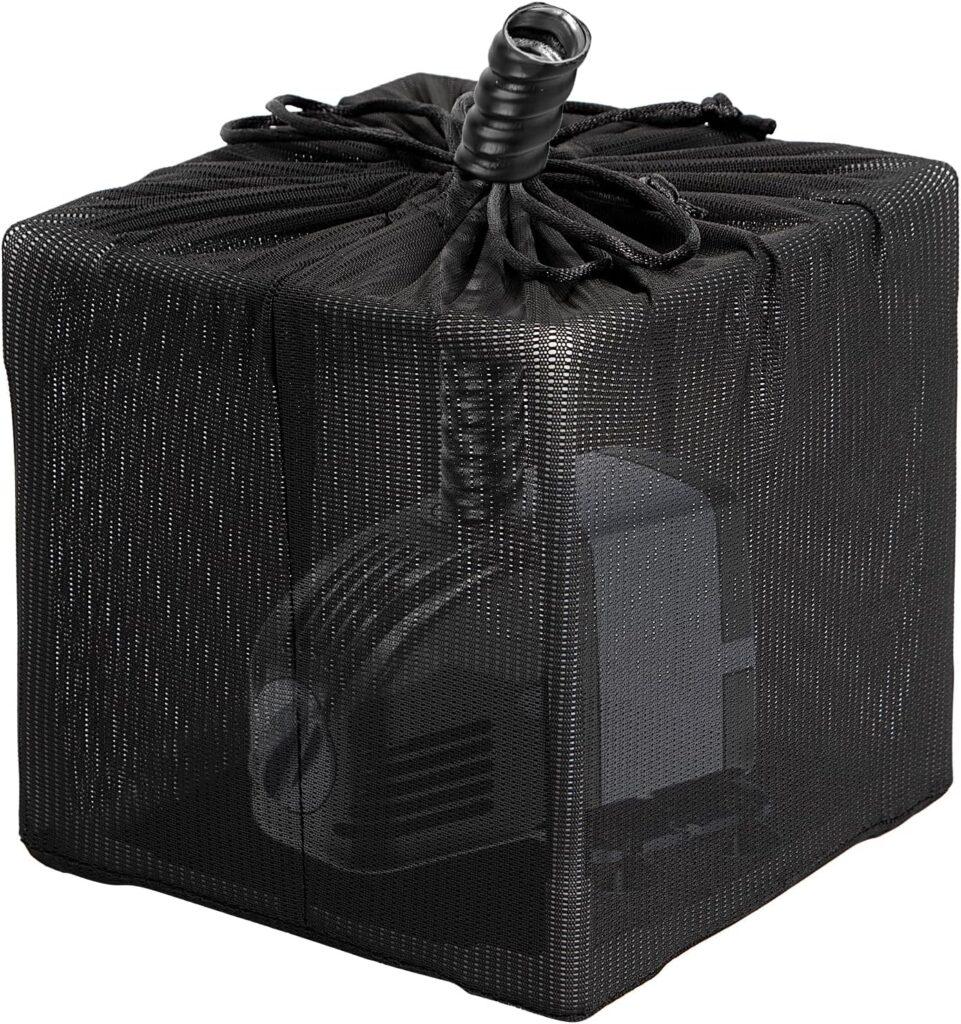
This is the “belt and suspenders” approach.
A pre-filter cage stops leaves.
A mesh screen stops the tiny junk.
This is especially useful if your bird bath sits under trees or near shrubs.
Time to set up: 10–15 minutes
What Usually Clogs (So You Can Avoid It)
Here are the biggest clog triggers I see:
❌ Floating Solar Fountains in Leafy Yards
They sit right at the surface where pollen and debris collect.
If you love floating fountains, you’ll need extra cleaning — or a cleaner placement.
❌ High-Spray Nozzles
High spray means:
- faster evaporation
- more dirt blowing in
- less water in the basin (which causes the pump to suck air)
Gentle bubbling is more reliable and more bird-friendly.
❌ Shallow Water Levels
Low water makes pumps work harder and increases sediment intake.
Top off water regularly — it matters more than people think.
Realistic Maintenance Expectations (So You Don’t Get Annoyed)
Here’s what “reliable” actually looks like:
- Weekly: quick rinse of intake sponge/screen (1–3 minutes)
- Every 2–4 weeks: deeper clean (10 minutes)
- Seasonally: check for mineral buildup (especially hard water areas)
If you want an easy cleaning routine:
👉 How To Keep A Bird Bath Fountain Clean
Printable “Doesn’t Clog” Checklist (Copy + Print)
Before you buy:
☐ Pump has sponge pre-filter OR filter box
☐ Intake is protected by a cage or fine mesh
☐ Flow rate is adjustable (so you can reduce spray)
☐ Pump is easy to open/rinse without tools
☐ Replacement sponges/screens are available
☐ Your bird bath depth matches the pump’s minimum depth
☐ You have a plan for debris (placement or cover)
After you install:
☐ Add a small pebble or riser under the pump to lift it off sediment
☐ Use a gentle bubbling nozzle (not the highest spray)
☐ Rinse filter weekly
☐ Top off water level every 1–2 days in hot weather
Product Recommendations
To keep your setup reliable, I’d use your site to steer visitors through the right buying path:
- 👉 Best Solar Bird Bath Bubblers
- 👉 Low Maintenance Fountain Systems
- 👉 Solar vs Plug-In Fountain Pumps
Frequently Asked Questions
What is the #1 reason bird bath pumps clog?
Debris and algae film get pulled into the intake and jam the impeller. Most pumps fail because the intake isn’t protected enough.
Do filters reduce flow?
Yes — slightly. But that’s a good trade-off because a pump that runs reliably at medium flow beats a pump that stops at full flow.
Are plug-in pumps less likely to clog than solar?
Not automatically, but plug-in pumps often have stronger motors and better filtration options — which makes them more forgiving.
How often should I rinse the filter?
Weekly is ideal. In heavy pollen season or leafy yards, every 3–4 days prevents problems.
Can I use vinegar to clean a clogged pump?
For mineral buildup, yes — a quick soak helps. Just rinse thoroughly before returning it to the bird bath.
Resources for More Information
- Cornell Lab of Ornithology (Bird Bath Tips): https://www.allaboutbirds.org
- National Audubon Society (Backyard Habitat Guidance): https://www.audubon.org
- EPA Mosquito Control Information: https://www.epa.gov/mosquitocontrol
Conclusion: Reliable Beats “Fancy”
If you want a bird bath fountain you actually enjoy (instead of a tiny maintenance chore), reliability comes down to three things:
- Intake protection (filter/sponge/screen)
- Water level control (don’t let it run low)
- Gentle bubbling over high spray
You don’t need the most expensive pump — you need the pump style that matches your yard.
- For example, if your yard is leafy or dusty, prioritize filtration.
- Or, if your yard is shaded, consider plug-in or external panel solar.
- If you want the easiest setup, solar works — but build in a filter routine from day one.
And if you want the simplest decision path, I’d start here next:
👉 Best Solar Bird Bath Bubblers (Top Picks)