
If you’ve ever added a fountain to a bird bath and felt like you adopted a tiny, needy pet… you’re not alone.
Most people don’t quit bird bath fountains because they don’t work. They quit because they work great for a week and then turn into a cycle of:
- pump clogging
- water turning green
- spray going everywhere
- refilling constantly
- “why is this thing making that noise?”
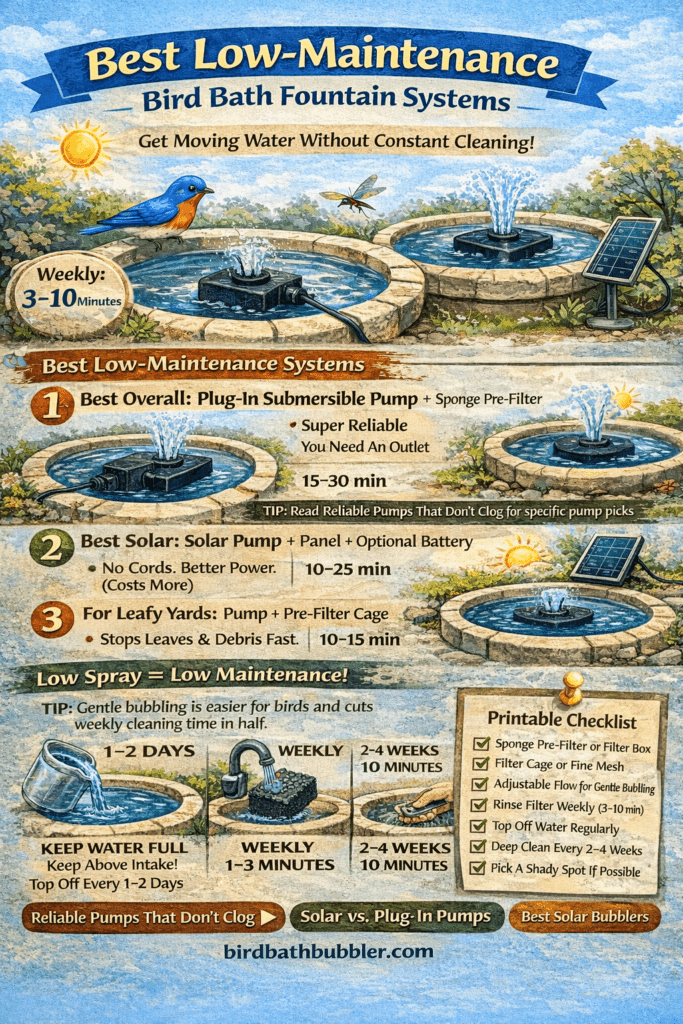
The real secret to low maintenance isn’t finding a “magic” fountain. It’s choosing a system that’s naturally forgiving — meaning it’s designed to resist clogging, tolerate a little debris, and keep flowing without perfect conditions.
Below are the most low-maintenance bird bath fountain system setups I recommend again and again, plus exactly what trade-offs you’re making with each.
If you’re still deciding power type, read this first:
👉 Solar vs Plug-In Fountain Pumps
What “Low Maintenance” Actually Means (Realistic Expectations)
Let’s define it honestly:
A low-maintenance fountain system is one that usually only needs:
- 1–3 minutes weekly (quick rinse of intake/filter)
- 10 minutes monthly (deep clean the basin + pump wipe-down)
- occasional top-offs in hot weather
It does not mean “never clean it.” Outdoor water + sun + debris always equals some maintenance. The goal is to cut it down to something you’ll actually keep up with.
The Best Low-Maintenance System Types (Ranked)
1) Best Overall: Plug-In Submersible Pump + Sponge Pre-Filter
This is the “boring” choice that wins long-term.
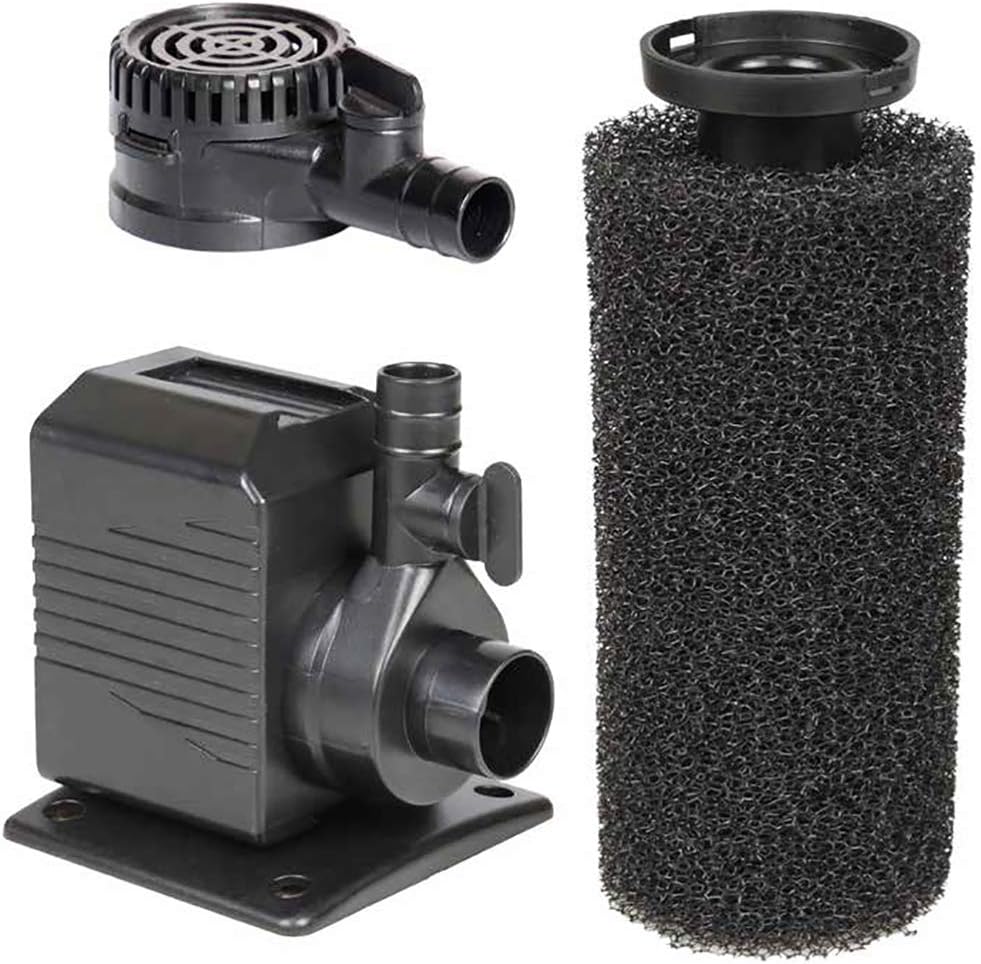
Why it’s low maintenance:
Plug-in pumps run consistently and generally have stronger motors. Pair that with a sponge pre-filter and you dramatically reduce clogs and sputtering.
Best for:
- shaded yards
- busy homeowners
- anyone sick of solar stopping
- bird baths near trees
Trade-offs:
- you need an outdoor GFCI outlet
- you’ll have a cord to manage (can be hidden)
Time to complete: 15–30 minutes
- place pump
- add filter/sponge
- route cord
- adjust flow/nozzle
If clogging is your main frustration, this is the guide you want next:
👉 The Most Reliable Pumps That Don’t Clog
2) Best Solar Setup: External Panel Solar Pump + Filter Box (Optional Battery)
If you want solar but don’t want babysitting, this is the move.
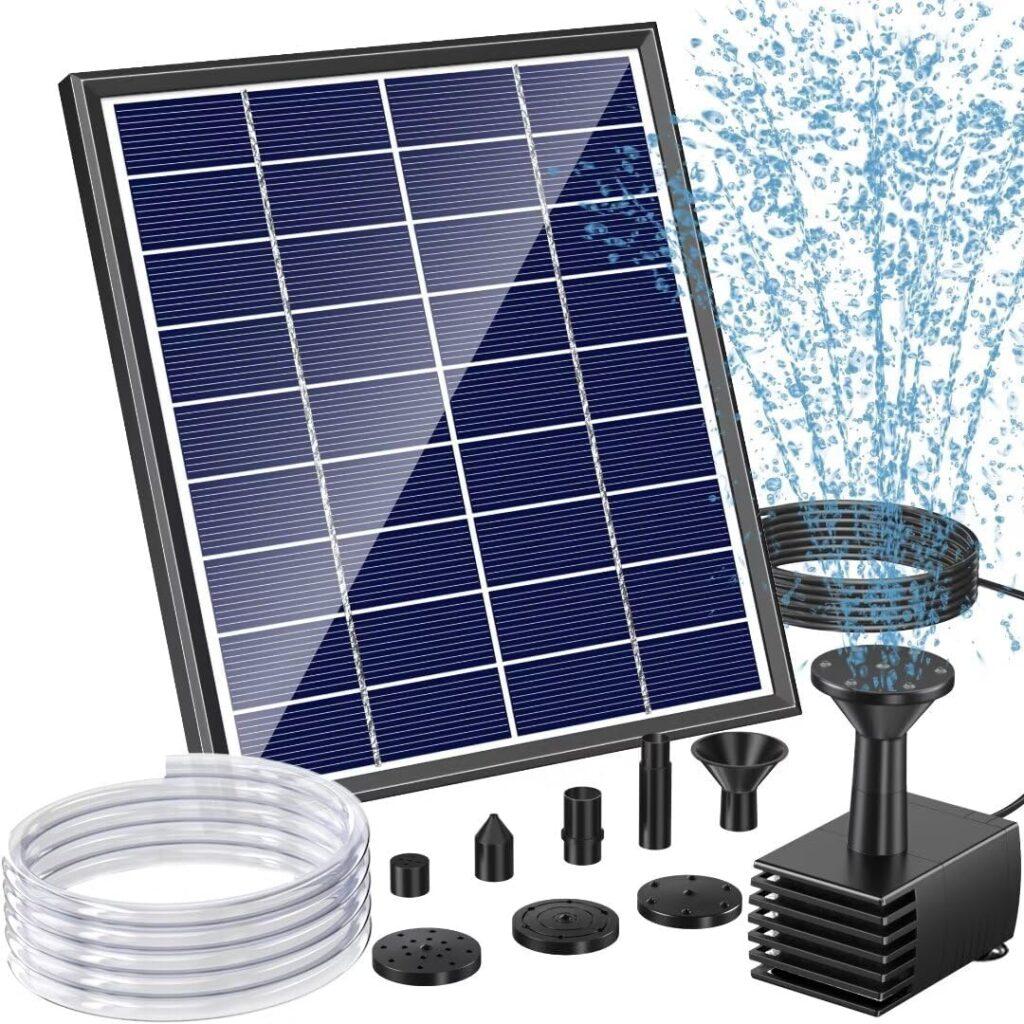
Why it’s low maintenance:
External panels deliver steadier power than floating solar fountains, and many of these systems have better intake protection options.
Best for:
- yards with strong sun
- people who hate cords
- patios or decks with good sunlight angles
Trade-offs:
- costs more than floating solar
- still sun dependent (unless battery backup)
Time to complete: 10–20 minutes
- position pump
- stake panel in full sun
- route panel cord neatly
- dial in spray height
Want solar picks?
👉 Best Solar Bird Bath Bubblers
3) Most “Set-And-Forget” for Leafy Yards: Pump + Pre-Filter Cage + Fine Mesh
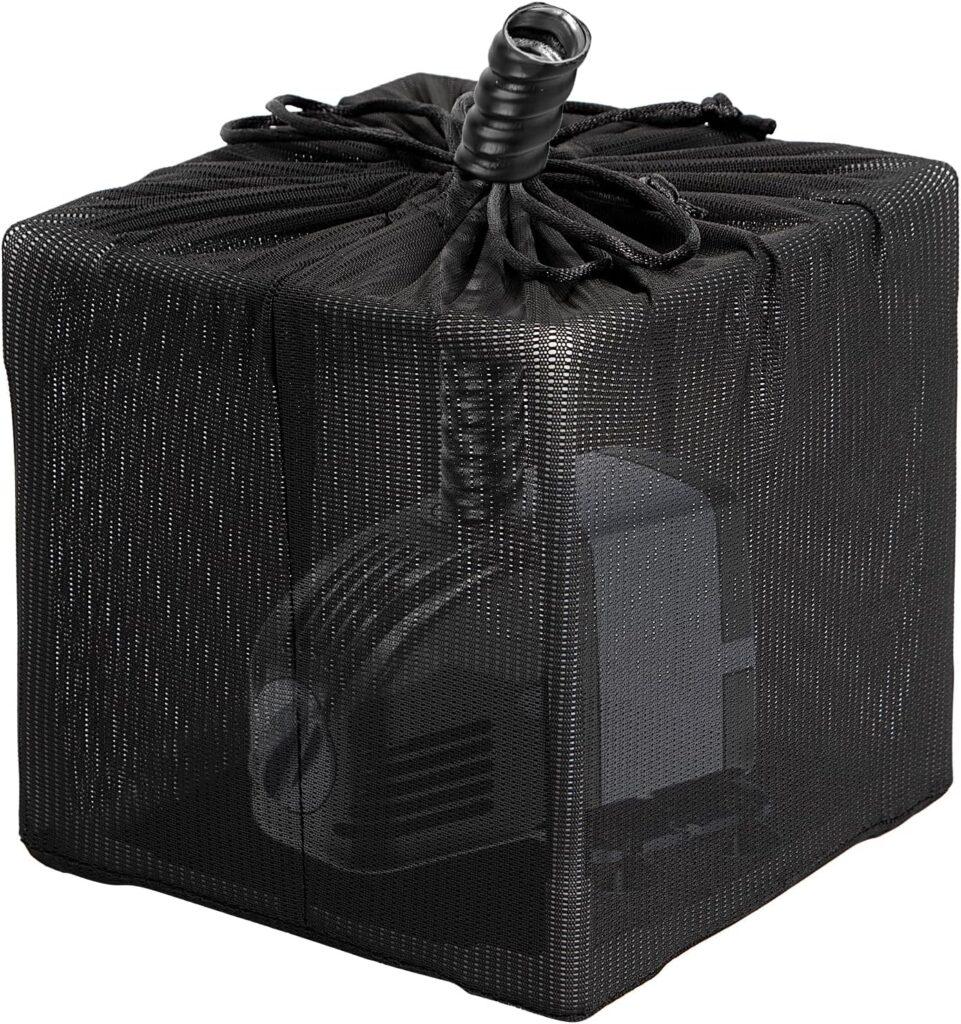
If your bird bath sits anywhere near trees, you need debris control that’s built-in — not wishful thinking.
Why it’s low maintenance:
A pre-filter cage stops big stuff. Fine mesh stops the tiny stuff. You end up rinsing the filter instead of reviving a dead pump.
Best for:
- heavy pollen areas
- fall leaf season
- gardens with shrubs nearby
Trade-offs:
- filter can reduce flow slightly
- requires a weekly rinse (but it’s fast)
Time to complete: 10–15 minutes
4) Lowest Maintenance “Look”: Gentle Bubbling (Not High Spray)
This is less a “system” and more a rule that changes everything. High spray = higher maintenance. Always.
Why?
- faster evaporation (more refilling)
- more dust and debris blown in
- water level drops → pump sucks air → stops/clogs faster
If you want low maintenance, pick a setup that gives a gentle dome/bubble or a low spray pattern. Birds actually prefer it too. (You can also remove the fancy spray nozzles from most floating solar fountains and turn the spray into a bubbler.)
Time to complete: 2 minutes (swap nozzle head)
The Low-Maintenance Habits That Matter Most
Even the best system becomes annoying without these three habits:
1) Keep Water Level Above the Intake
Low water is a pump killer and clog trigger.
Realistic habit: top off every 1–2 days in warm weather.
2) Rinse the Filter Weekly
Not monthly. Weekly.
Time: 60–180 seconds
This is the difference between “easy hobby” and “annoying chore.”
3) Clean the Basin Before It Gets Slimy
Once algae builds a slick film, it catches debris faster and clogs pumps.
Time: 10 minutes every 2–4 weeks.
Printable Low-Maintenance Checklist (Copy + Print)

Choosing a low-maintenance system:
☐ Has sponge pre-filter or filter box
☐ Intake protected with cage or fine mesh
☐ Adjustable flow so you can reduce spray
☐ Easy to open/rinse without tools
☐ Works with your sunlight (or has outlet access)
☐ Nozzle supports gentle bubbling (not high spray)
☐ Replacement sponges/screens available
Keeping it low maintenance:
☐ Rinse filter weekly (1–3 min)
☐ Top off water regularly
☐ Deep clean every 2–4 weeks
☐ Reduce spray height to limit evaporation
☐ Place bath away from heavy leaf drop if possible
Product Recommendations (Internal Pages)
Here are the best internal “next click” recommendations to build reader confidence and keep them moving:
- 👉 Solar vs Plug-In Fountain Pumps
- 👉 Reliable Pumps That Don’t Clog
- 👉 Best Solar Bird Bath Bubblers
- 👉 Bird Bath Bubblers Made Simple (Start Here)
Frequently Asked Questions
What is the lowest maintenance bird bath fountain option?
A plug-in submersible pump with a sponge pre-filter is typically the lowest maintenance because it runs consistently and resists clogging.
Are solar bird bath fountains high maintenance?
Floating solar fountains can be, especially in leafy or dusty yards. External panel solar systems with better intake protection are much easier to maintain.
How often should I clean a bird bath fountain system?
Quick rinse weekly, deeper clean every 2–4 weeks. In hot weather or heavy pollen season, you may need to rinse the filter more often.
Do bird bath fountains reduce mosquitoes?
Moving water discourages mosquito breeding because mosquitoes prefer still water to lay eggs. It helps, but topping off and cleaning still matter.
Why does my pump keep stopping even when it’s clean?
Common causes include low sunlight (solar), low water level, air intake from evaporation, or mineral buildup affecting the impeller.
Reputable Resources for More Information
- Cornell Lab of Ornithology (Bird Bath Tips): https://www.allaboutbirds.org
- National Audubon Society (Backyard Bird Habitat): https://www.audubon.org
- EPA Mosquito Control Guidance: https://www.epa.gov/mosquitocontrol
Conclusion: Low Maintenance Is a System, Not a Brand
The best low-maintenance bird bath fountain setup isn’t necessarily the cheapest or the fanciest. It’s the one that matches your yard and eliminates the two biggest pain points:
- clogged pumps
- evaporation/refilling
If you want the least hassle, go plug-in with a sponge pre-filter and gentle bubbling. If you want solar, choose an external panel system and accept that cloudy-day pauses are part of the deal.
Either way, once you dial in filtration + low spray + weekly rinse habits, you’ll have the kind of bird bath fountain you can enjoy without constantly tinkering with it.