
Backyard water features are one of the easiest ways to attract birds and add life to a garden. The sound of moving water, the reflections, and the activity from visiting birds make even a small fountain or bird bath feel like a centerpiece.
But there’s one reality every water-feature owner learns quickly: they get dirty fast.
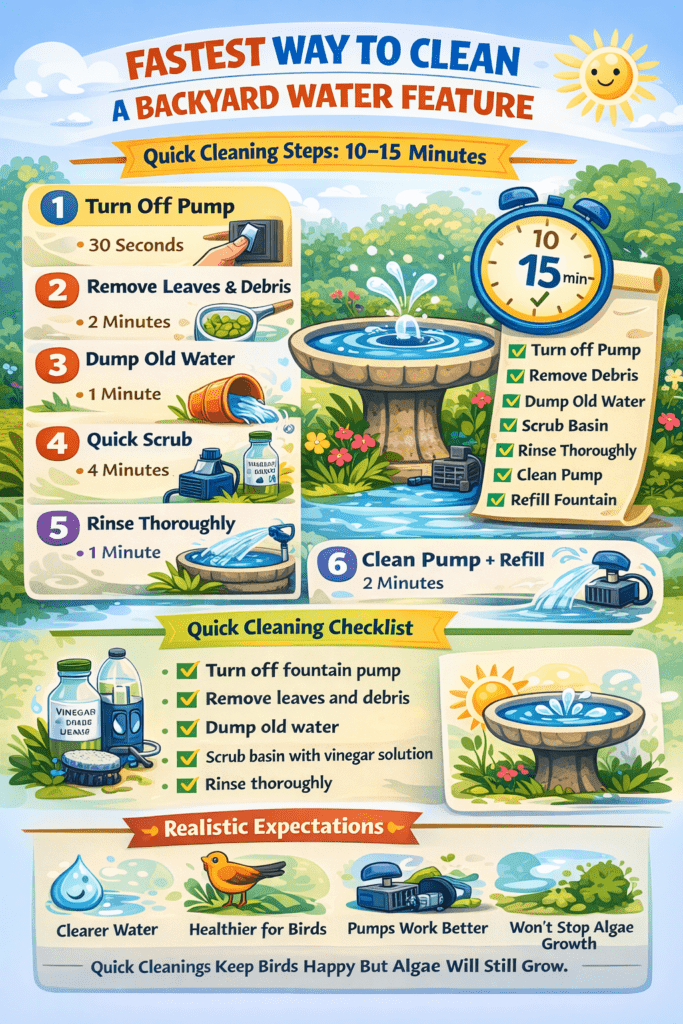
Algae, dust, leaves, pollen, and bird droppings can turn clear water cloudy within days. The good news is that cleaning a backyard water feature doesn’t need to be a big project. With the right method, most small fountains and bird baths can be cleaned in 10–15 minutes.
Below is the fastest method I’ve found for keeping a backyard water feature clean without taking the entire thing apart.
Why Water Features Get Dirty So Quickly
Before jumping into the cleaning process, it helps to understand what you’re dealing with.
Most backyard fountains collect:
- Algae growth from sunlight and nutrients
- Pollen and dust blowing through the yard
- Leaves and debris from nearby trees
- Bird droppings and feathers
In warm weather, algae can start growing in as little as 48 hours.
That’s why quick maintenance works better than occasional deep cleaning. Short, frequent cleanings keep algae from building up and keep pumps working efficiently.
The Fastest Cleaning Method (10–15 Minutes)
This method works for most small backyard water features including:
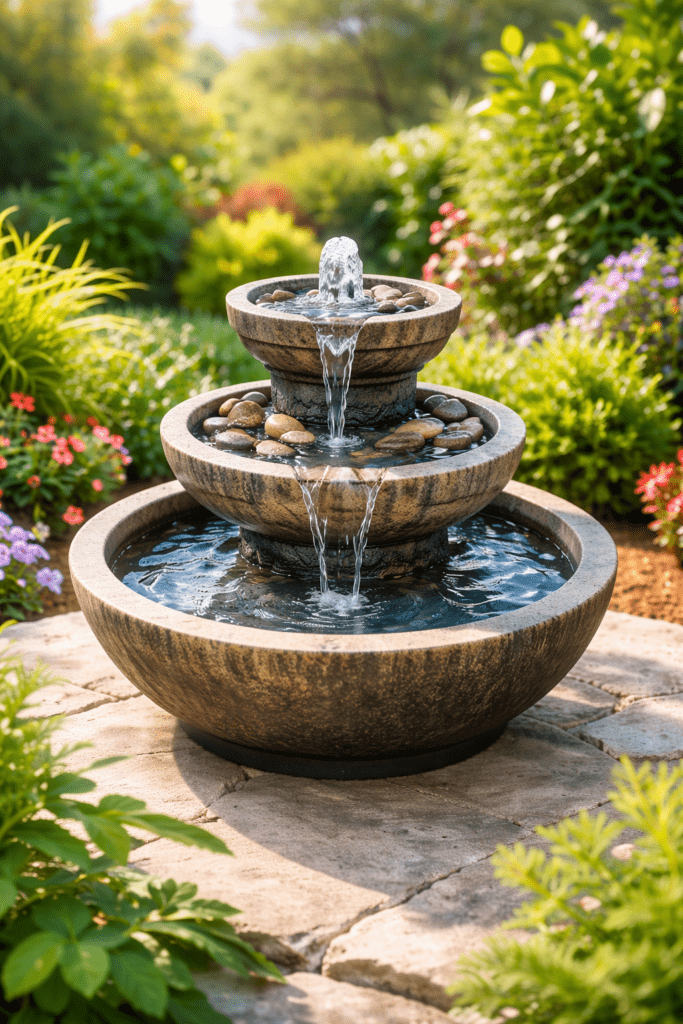
- bird baths
- solar fountains
- tabletop fountains
- small garden ponds
Step 1: Turn Off the Pump
Time: 30 seconds
If your water feature has a pump, turn it off first. This prevents debris from getting sucked into the motor while you clean. If you’re using a small solar fountain, simply remove the fountain head from the water.
If you’re installing a pump for the first time, this guide shows the easiest setup:
How to Install a Solar Fountain Pump in 10 Minutes.
Step 2: Remove Leaves and Debris
Time: 1–2 minutes
Use a small net, cup, or your hand to remove:
- floating leaves
- twigs
- feathers
- large algae clumps
This quick step prevents debris from breaking down and clouding the water.
Step 3: Dump the Water
Time: 1 minute
For bird baths and small fountains, the fastest cleaning method is simply emptying the basin. Lift or tip the basin and dump the water onto nearby plants or soil. This removes:
- mosquito larvae
- suspended debris
- most algae spores
Fresh water immediately improves clarity.
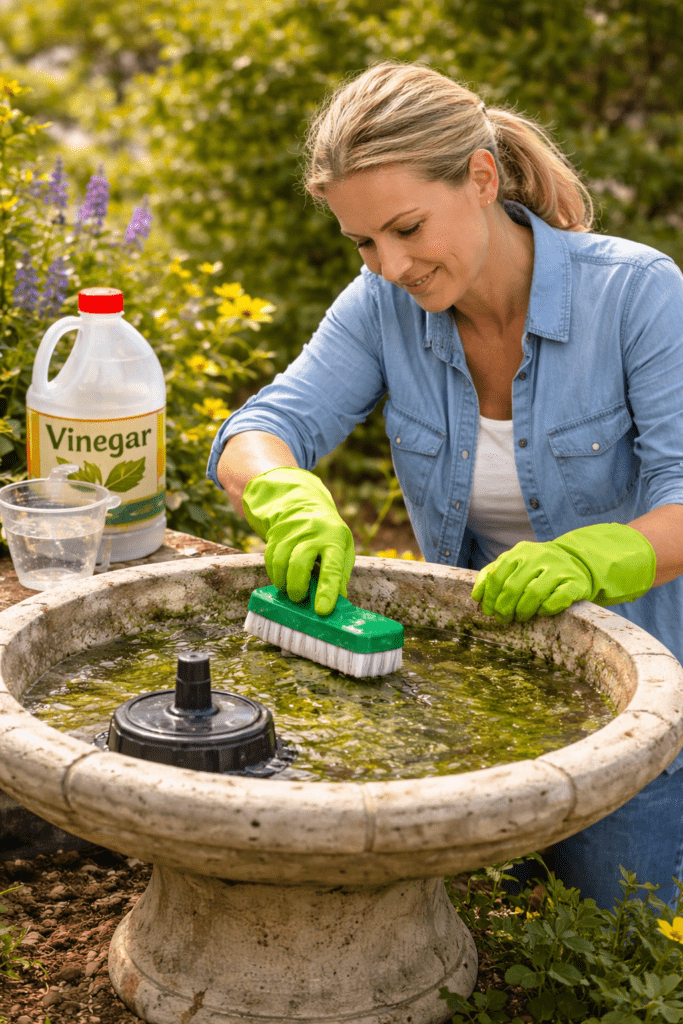
Step 4: Quick Scrub
Time: 3–5 minutes
Use a soft scrub brush or sponge.
Lightly scrub the inside surfaces to remove:
- green algae film
- mineral buildup
- dirt rings around the basin
A simple solution works well:
- 1 part white vinegar
- 9 parts water
Avoid soaps or harsh chemicals because they can harm birds and wildlife.
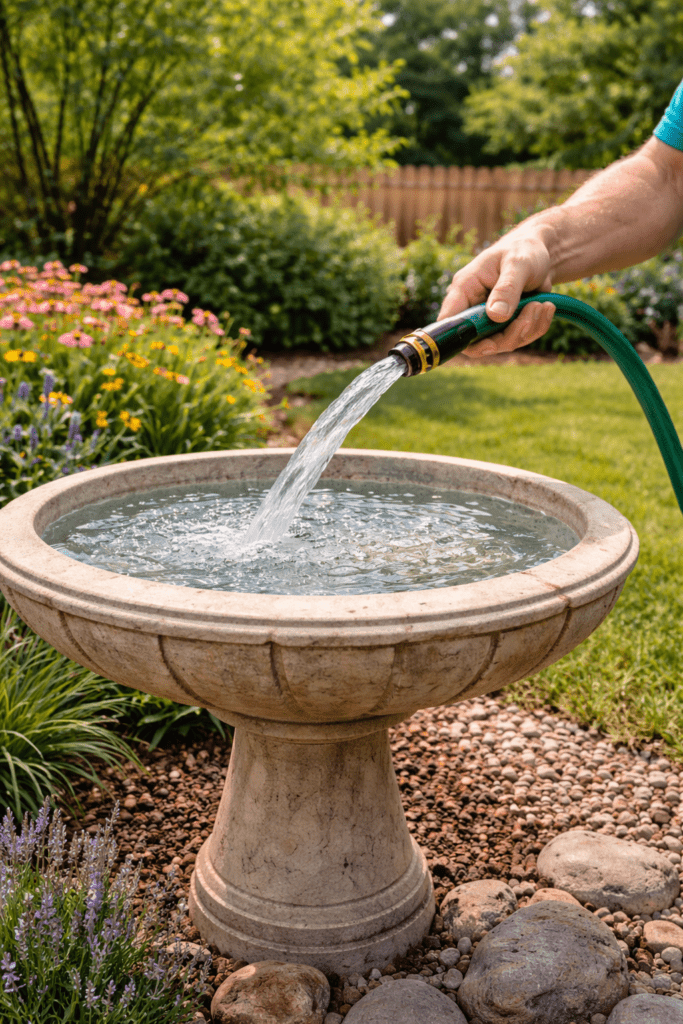
Step 5: Rinse Thoroughly
Time: 1 minute
Use a garden hose or bucket of clean water to rinse the basin. Make sure no vinegar residue remains. This step is quick but important for keeping water safe for birds.
Step 6: Clean the Pump Intake
Time: 2–3 minutes
Pumps collect debris around the intake screen. Remove the pump and rinse it to remove:
- algae
- grit
- leaf fragments
A clogged pump is the most common reason fountains stop working. If you’re choosing a pump for a new feature, see this guide: Best Mini Pumps for Small Backyard Ponds.
Step 7: Refill With Fresh Water
Time: 1 minute
Refill the basin with clean water and reinstall the pump or fountain head. You should immediately notice:
- clearer water
- stronger fountain spray
- improved water circulation
Moving water also helps reduce mosquito breeding. You can learn more about that here:
Does Running Water Keep Mosquitoes Away?
Total Cleaning Time
| Task | Time |
|---|---|
| Turn off pump | 30 seconds |
| Remove debris | 2 minutes |
| Dump water | 1 minute |
| Scrub basin | 4 minutes |
| Rinse | 1 minute |
| Clean pump | 3 minutes |
| Refill | 1 minute |
Total time: about 10–12 minutes
Trade-Offs and Things to Know
Even the fastest cleaning routine has a few limitations.
Algae Will Still Return
Sunlight and nutrients always encourage algae growth. Regular quick cleanings prevent buildup but won’t stop algae entirely.
Hard Water Can Leave Mineral Deposits
If you live in an area with hard water, white mineral rings may appear on the basin. Vinegar works well to dissolve these deposits.
Solar Pumps Require Extra Attention
Solar pumps stop running when sunlight disappears. When water sits still for long periods, algae and mosquito larvae can develop faster.
Choosing a solar pump with battery backup helps keep water circulating.
Realistic Expectations
With this quick cleaning method you can expect:
✔ clearer water
✔ healthier environment for birds
✔ better pump performance
✔ less algae buildup
But it will not completely eliminate:
✖ algae growth
✖ debris from trees
✖ pollen buildup in spring
Regular maintenance is still the key. Most bird bath owners find that cleaning every 3–5 days keeps everything looking great.

Printable Quick Cleaning Checklist
Time to complete: 10–15 minutes
Print this and keep it near your garden tools.
✔ Turn off fountain pump
✔ Remove leaves and debris
✔ Dump old water
✔ Scrub basin with vinegar solution
✔ Rinse thoroughly
✔ Clean pump intake screen
✔ Refill with fresh water
✔ Restart fountain
Frequently Asked Questions
How often should I clean a backyard fountain?
Most small fountains and bird baths should be cleaned every 3–5 days, especially during warm weather. This prevents algae and mosquito larvae from developing.
Is vinegar safe for bird baths?
Yes. White vinegar is commonly used to clean bird baths because it removes algae and mineral deposits without leaving harmful residues. Always rinse thoroughly afterward.
Can I use soap to clean a fountain?
It’s best to avoid soaps or detergents. Even small amounts can harm birds or wildlife that drink from the water. Vinegar and a scrub brush usually work perfectly.
Why does my fountain pump keep clogging?
Pump intakes collect:
- algae
- grit
- leaf fragments
Cleaning the pump every 1–2 weeks prevents most clogs.
Does moving water reduce mosquitoes?
Yes. Mosquitoes prefer still water for laying eggs. A bubbler or fountain makes the surface less suitable for breeding.
More Resources
For more information about bird baths and mosquito prevention:
- Cornell Lab of Ornithology – Bird Bath Tips & Placement
https://www.allaboutbirds.org - National Audubon Society – Backyard Bird Habitat Tips
https://www.audubon.org - National Wildlife Federation – Wildlife Garden Practices
https://www.nwf.org - CDC Mosquito Control Guide
Conclusion
Cleaning a backyard water feature doesn’t need to be a big weekend project. With the right routine, most bird baths and small fountains can be refreshed in about 10 minutes.
The key is simple: remove debris, dump old water, give the basin a quick scrub, and keep the pump clean. When you stay ahead of algae and debris, your fountain will stay clear, your pump will run better, and birds will continue visiting your yard throughout the season.
A few minutes of maintenance every few days keeps your water feature looking great—and keeps your backyard feeling alive.